- Works of Art
- A LARGE PAIR OF EBONISED WALL BRACKETS
A LARGE PAIR OF EBONISED WALL BRACKETS
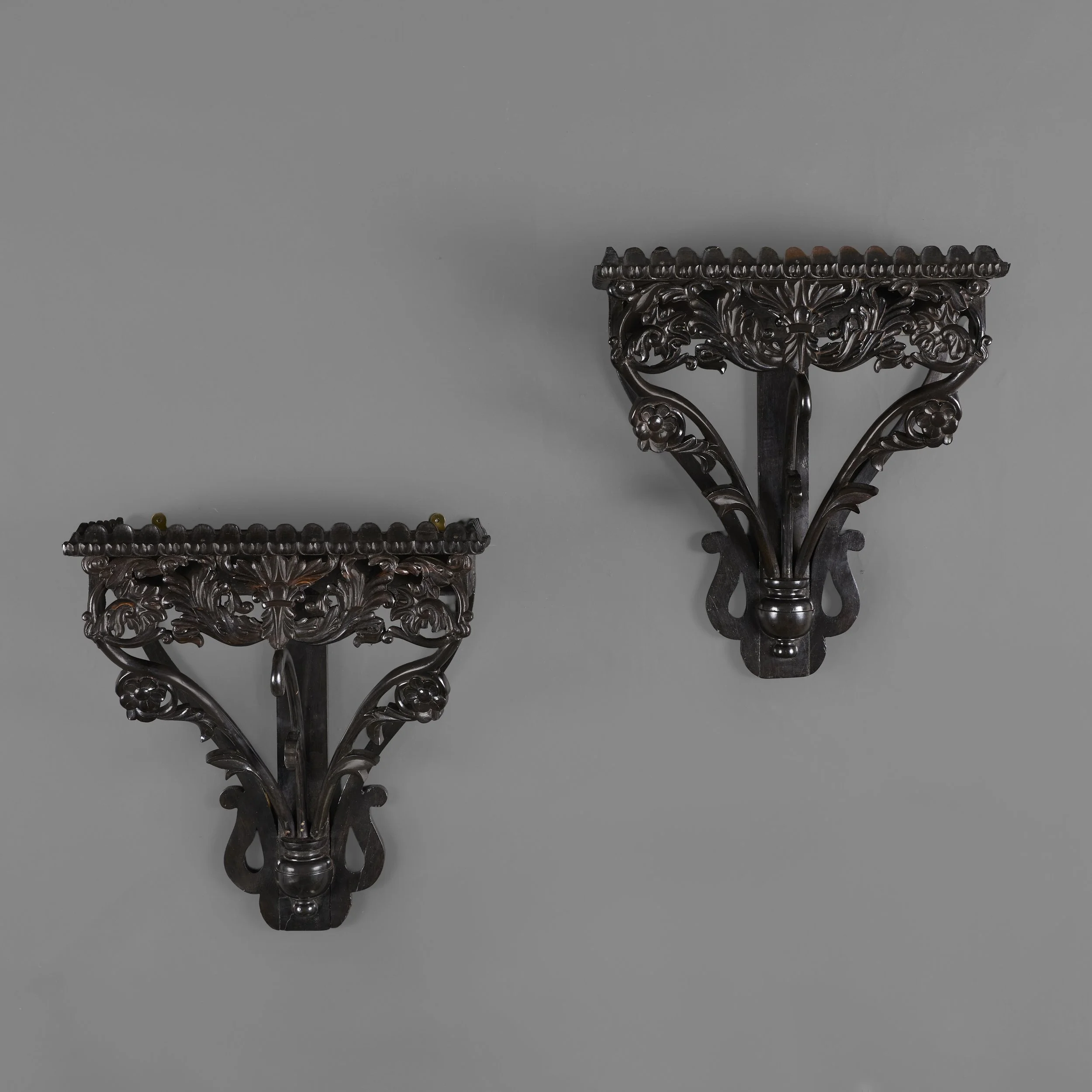
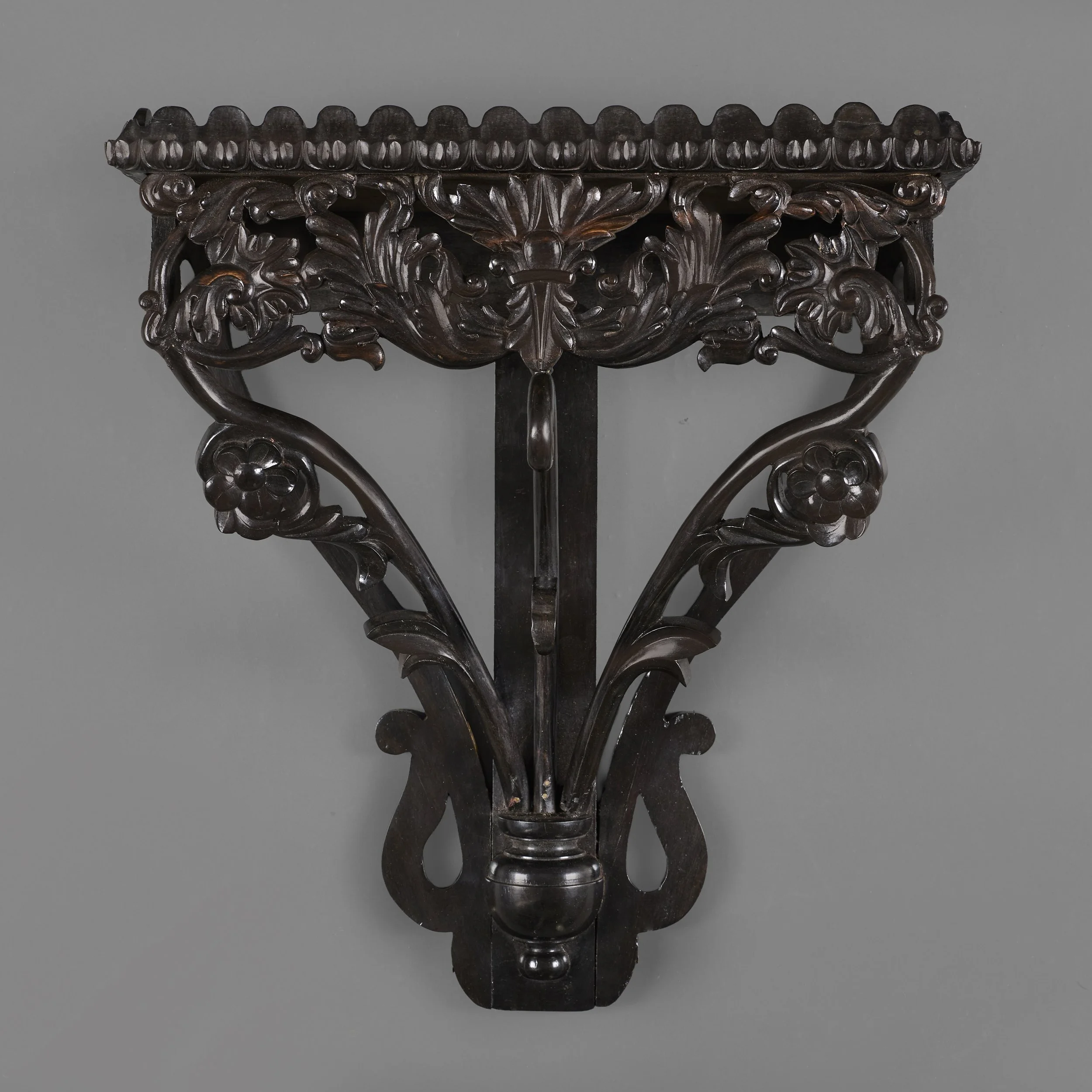
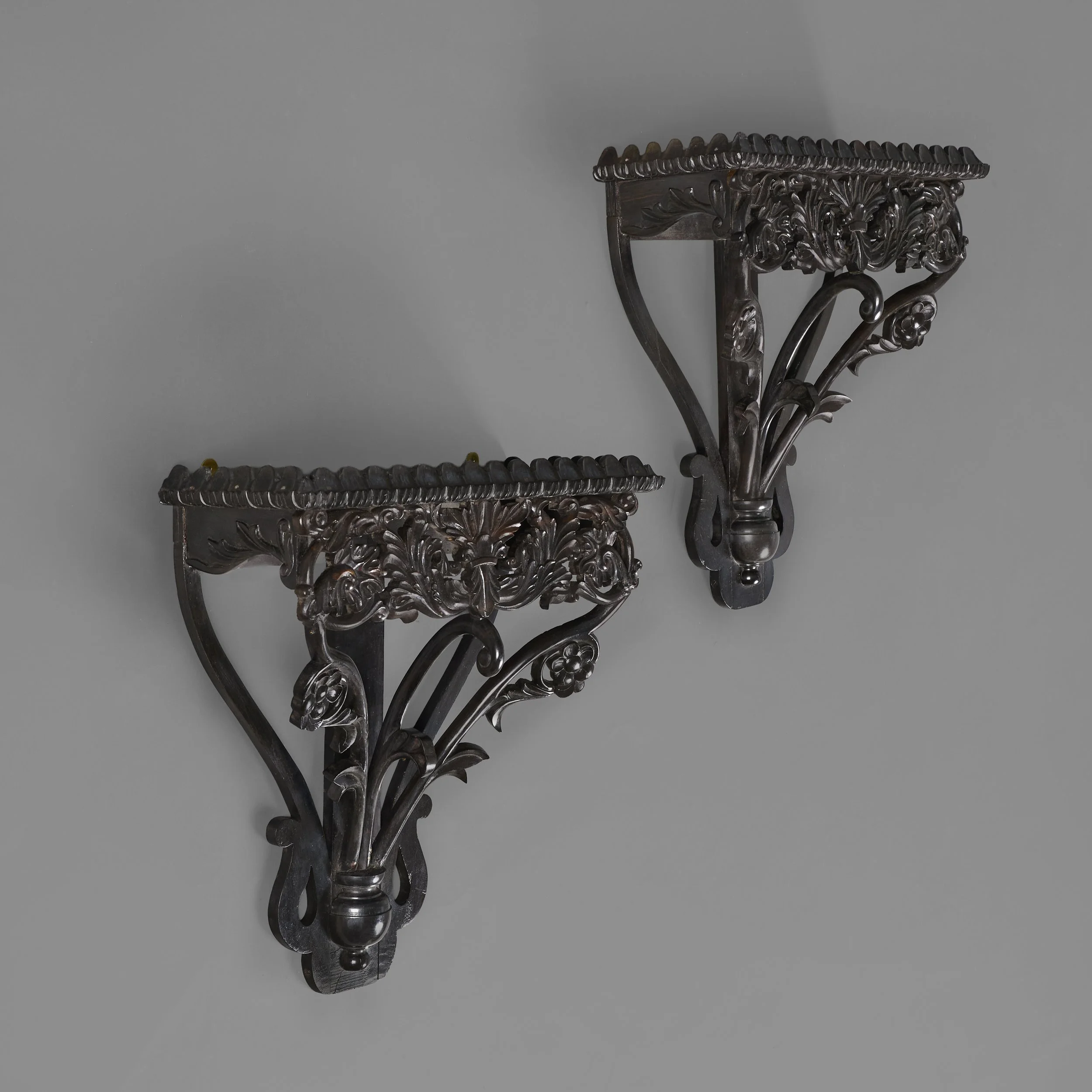
A LARGE PAIR OF EBONISED WALL BRACKETS
Anglo-Sinhalese, Circa 1920
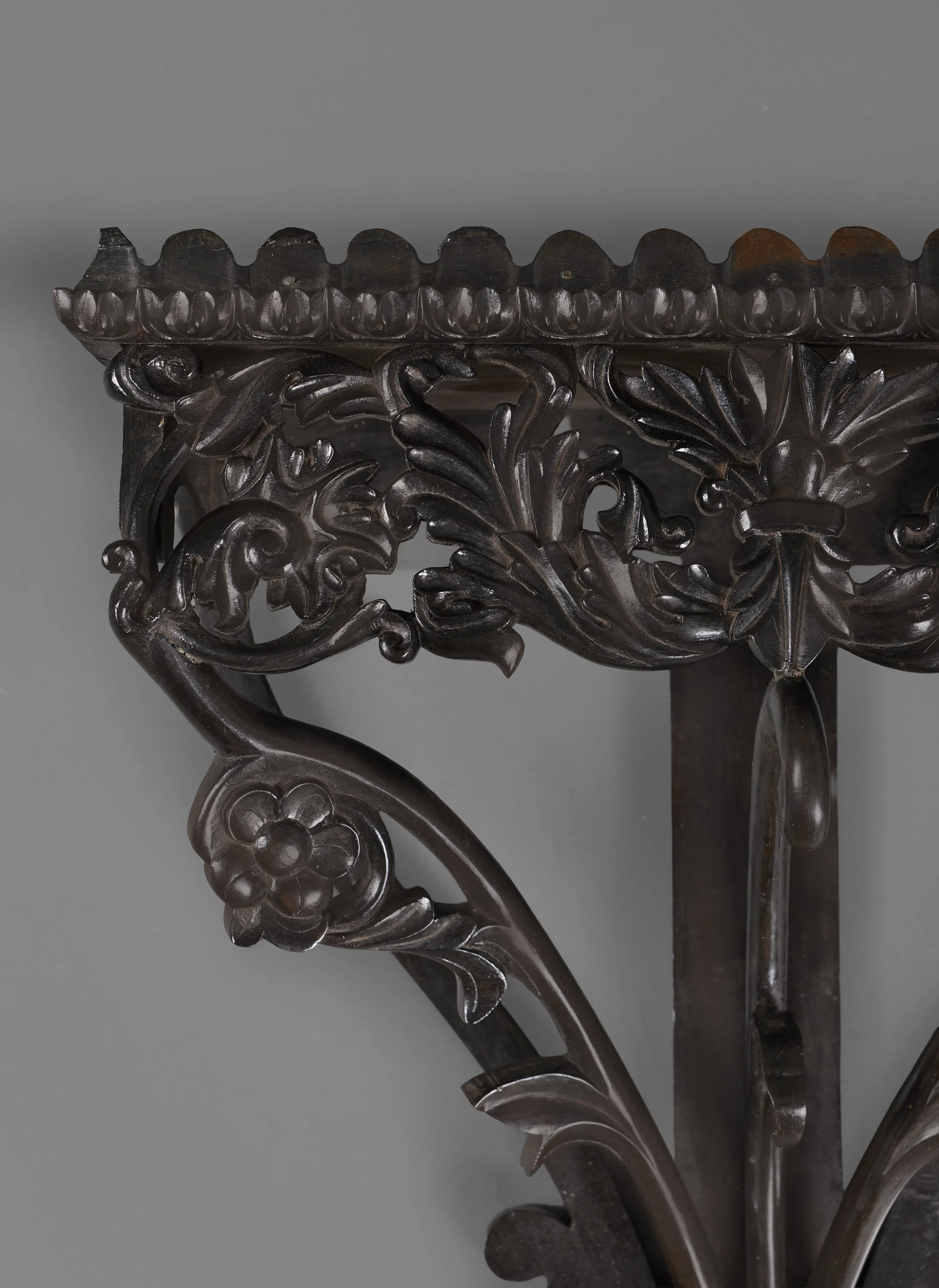
A fine pair of early twentieth century Anglo- Sinhalese carved ebonised wall brackets, with egg and dart moulding above a pierced apron, densely carved with scrolling acanthus leaves, the scrolling section below, flanked by two small carved rosettes. The bracket resolves into a lyre-form support with scrolled volutes meeting at a turned baluster finial.
Height 48.00cm
Width 43.00cm
Depth 18.00cm
“Ceylon abounds with teak, nadoon, pericopsis mooniana, satinwood, black and variegated ebony, timber commonly called calamander… and innumerable other trees,” wrote JW Bennett, a British colonial official and naturalist, in 1843.
This rich variety of native timbers naturally supported a flourishing furniture-making tradition in Sri Lanka. Over several centuries, a distinctive Ceylonese style emerged shaped by Portuguese, Dutch and British influences.
This hybrid aesthetic, combining the formality of European furniture design with local craftsmanship and richly figured timbers, chimes particularly well with today’s taste.