- Tables
- A RARE WILLIAM IV SEPTARIAN NODULE CENTRE TABLE
A RARE WILLIAM IV SEPTARIAN NODULE CENTRE TABLE
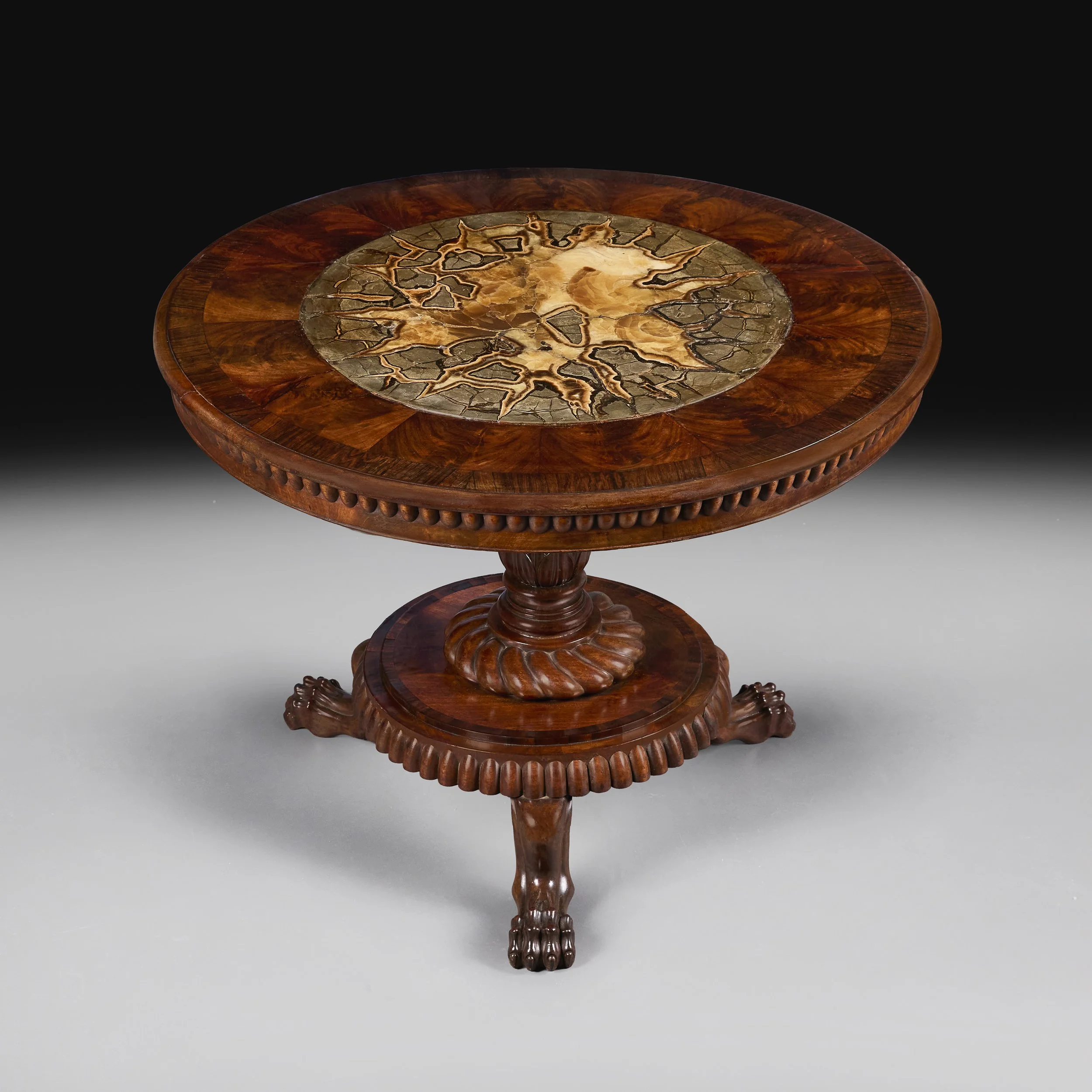
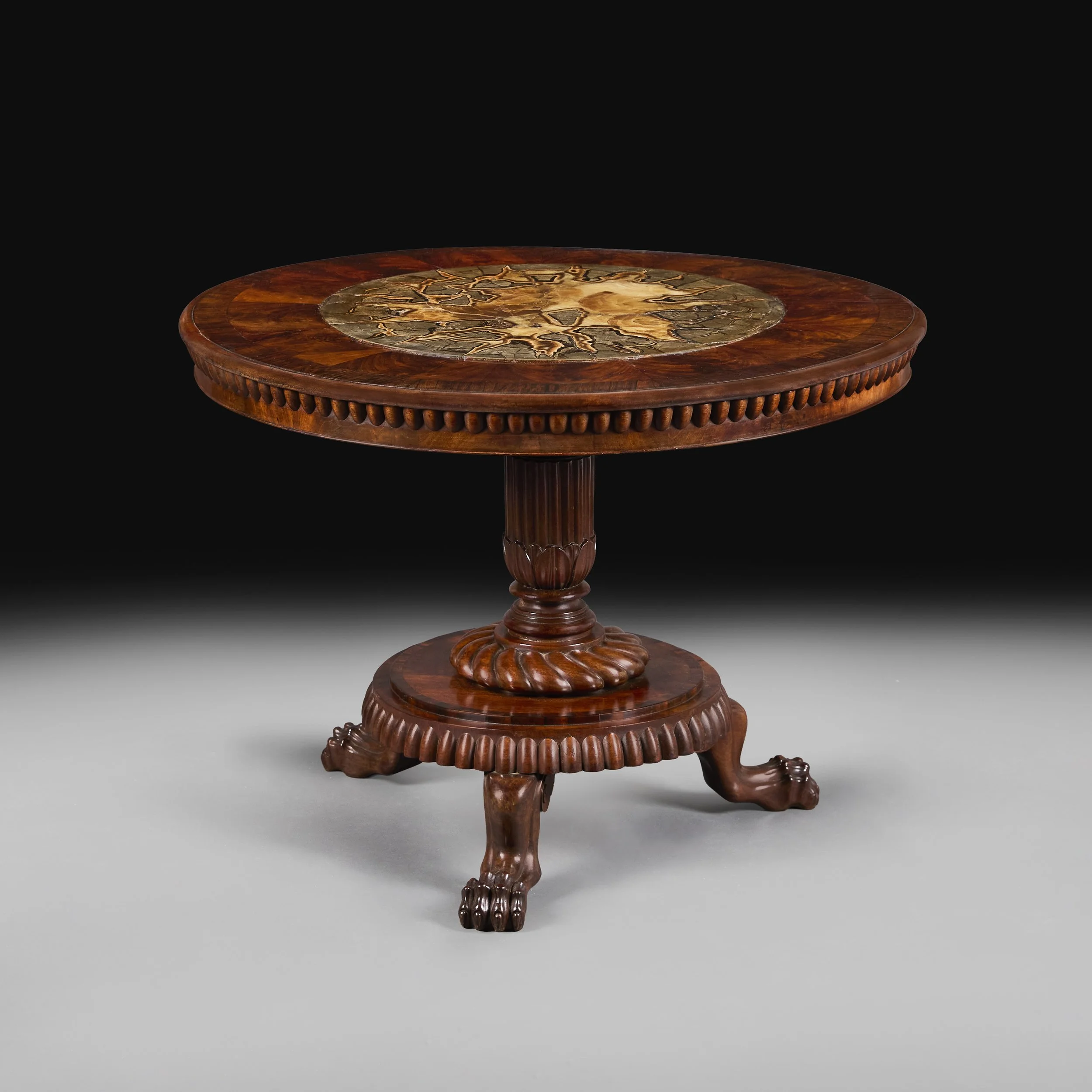
A RARE WILLIAM IV SEPTARIAN NODULE CENTRE TABLE
England, circa 1830
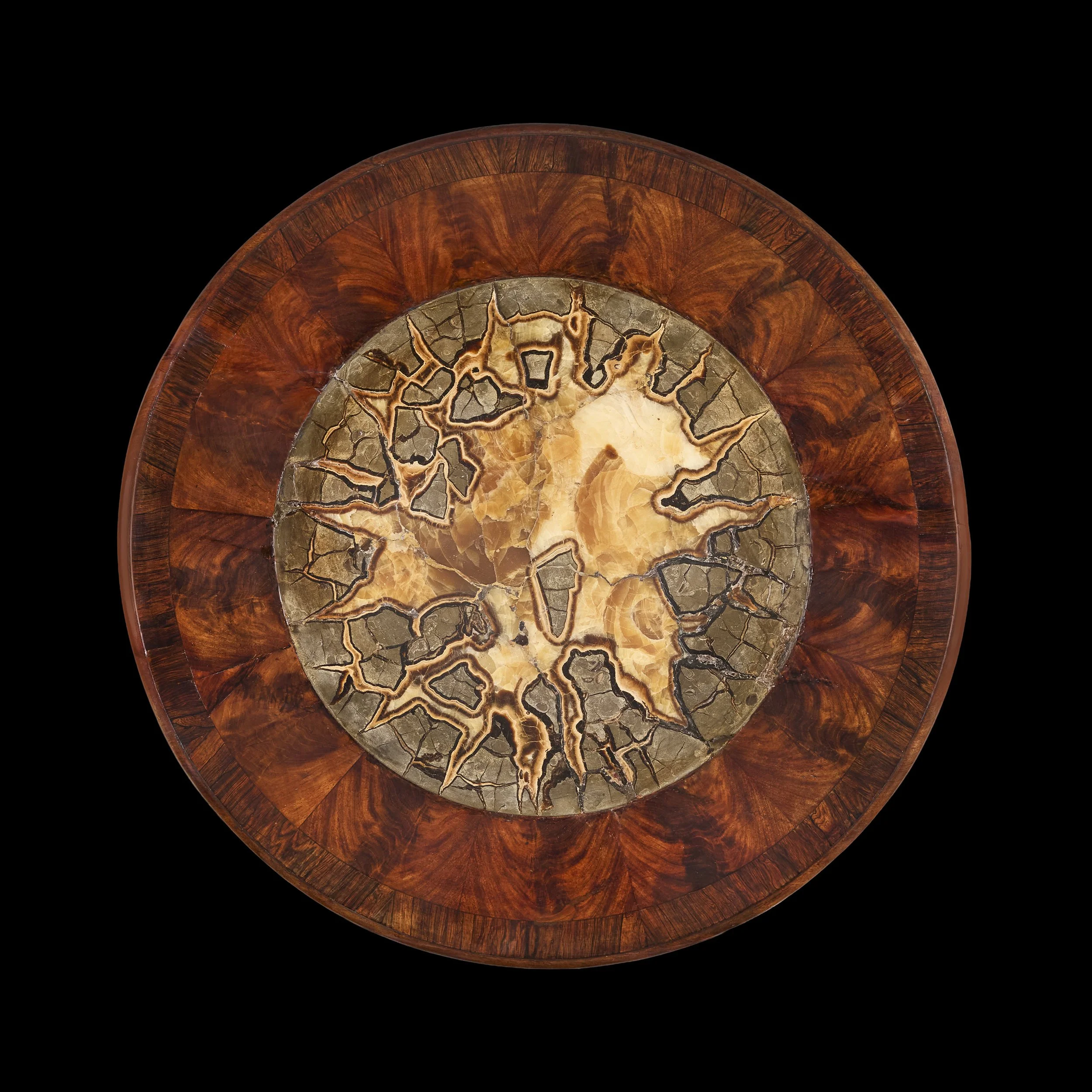
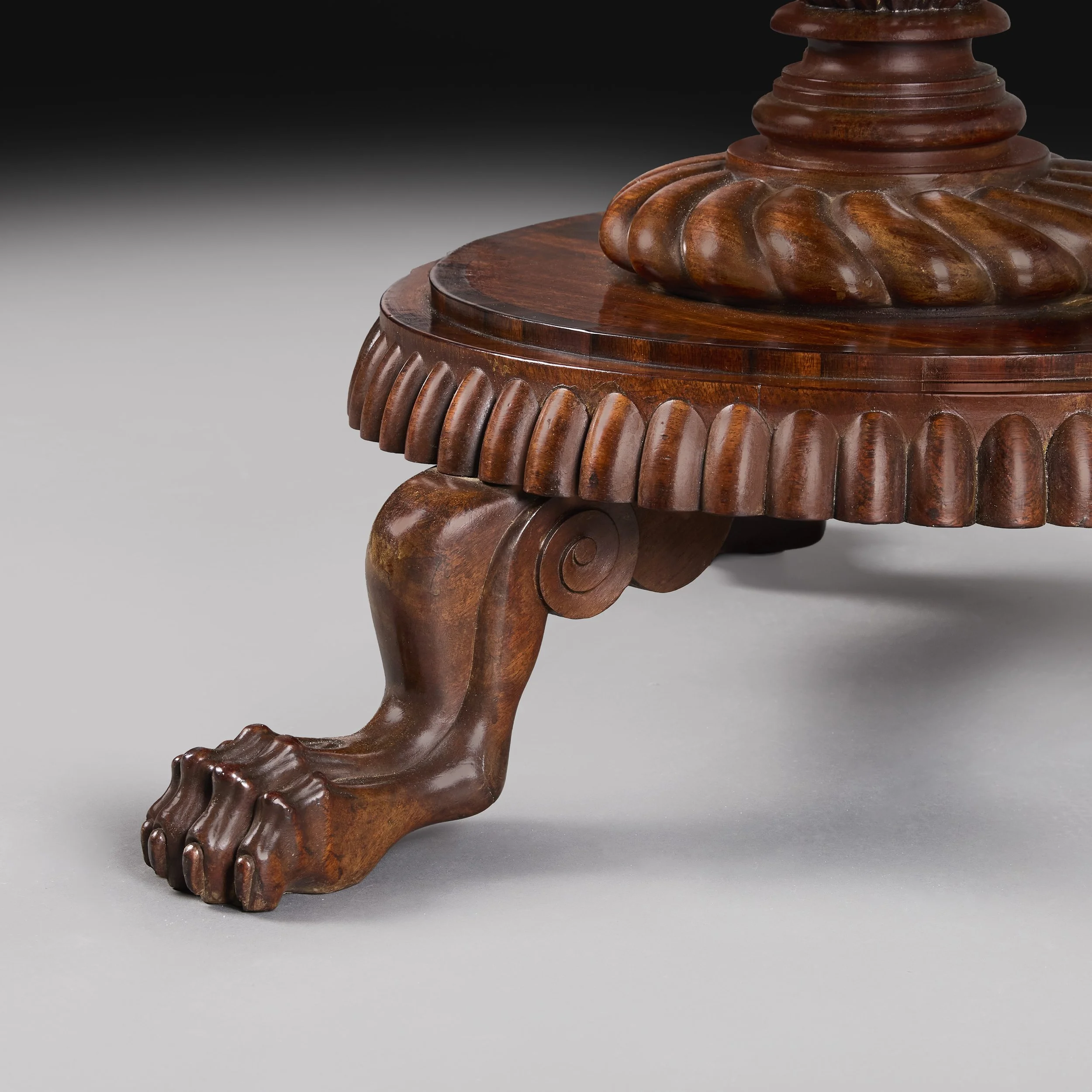
A fine and rare early nineteenth century William IV centre table, the flame mahogany top inset with a round of septarian nodule or dragon stone, a rare and distinctive geological concretion formed 50 to 70 million years ago. It features an outer limestone shell with a network of internal shrinkage cracks (called septaria) filled with yellow calcite and brown aragonite. The top supported by a carved gadrooned stem decorated with a band of laurel leaves, all terminating in three carved lions paw feet.
A comparable example is held by the White House Historical Association, having been commissioned by Anthony Gabriel Quervelle c. 1829 and place in the East Room under the chandelier.
Height 72.00cm
Diameter 97.00cm