- Tables
- AN EXCEPTIONAL 19TH CENTURY AMBOYNA TABLE BY HOLLAND AND SONS
AN EXCEPTIONAL 19TH CENTURY AMBOYNA TABLE BY HOLLAND AND SONS
AN EXCEPTIONAL 19TH CENTURY AMBOYNA TABLE BY HOLLAND AND SONS
England, circa 1850
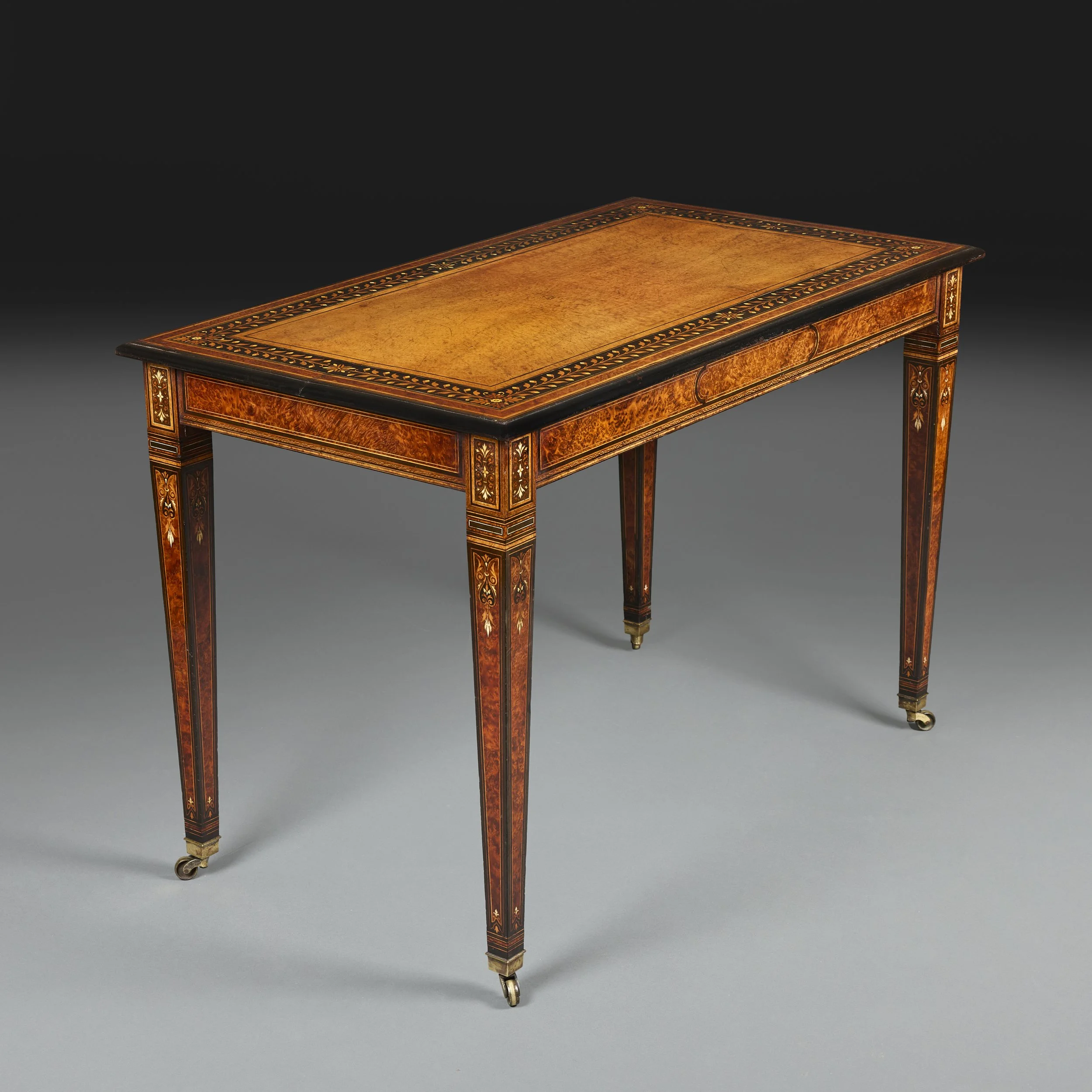
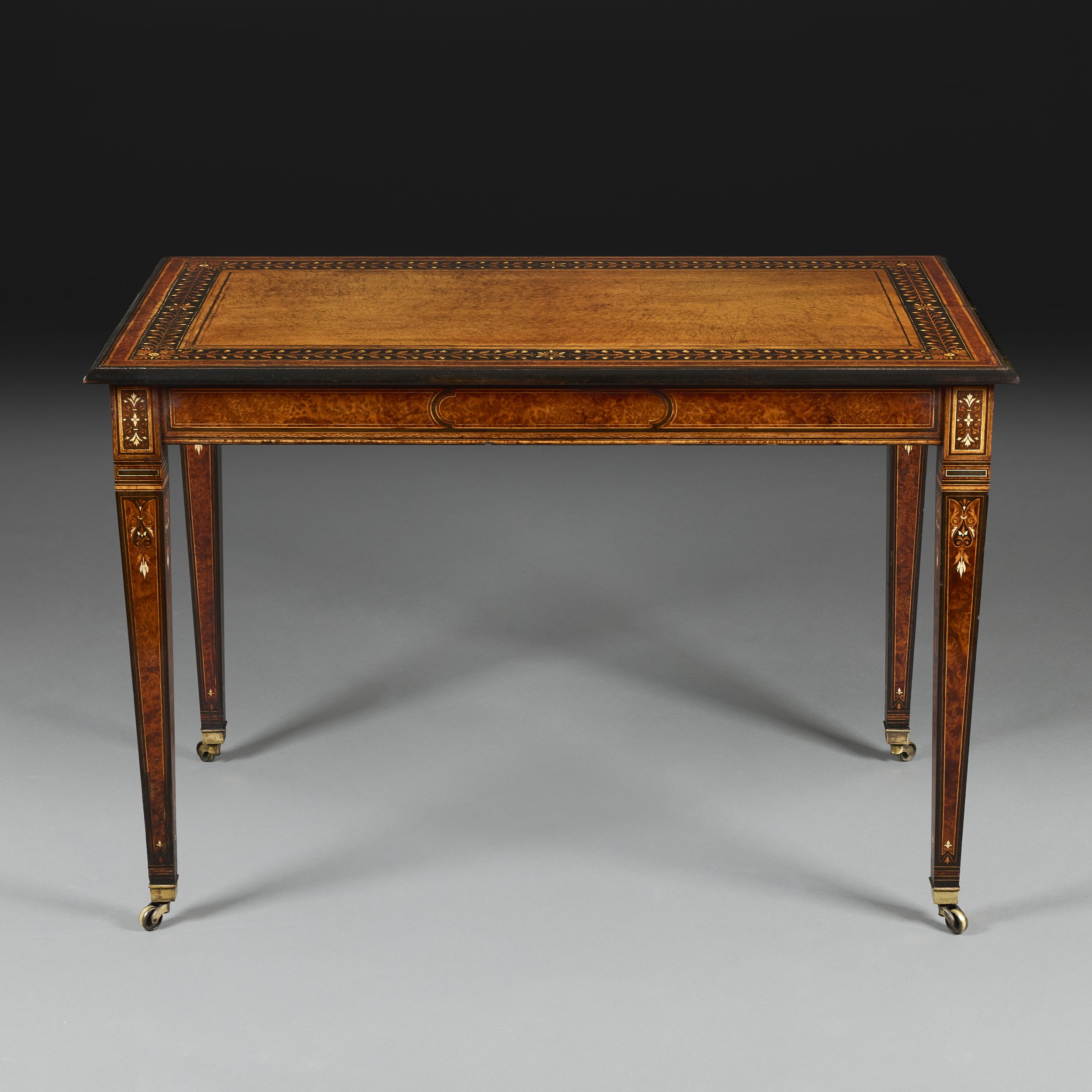
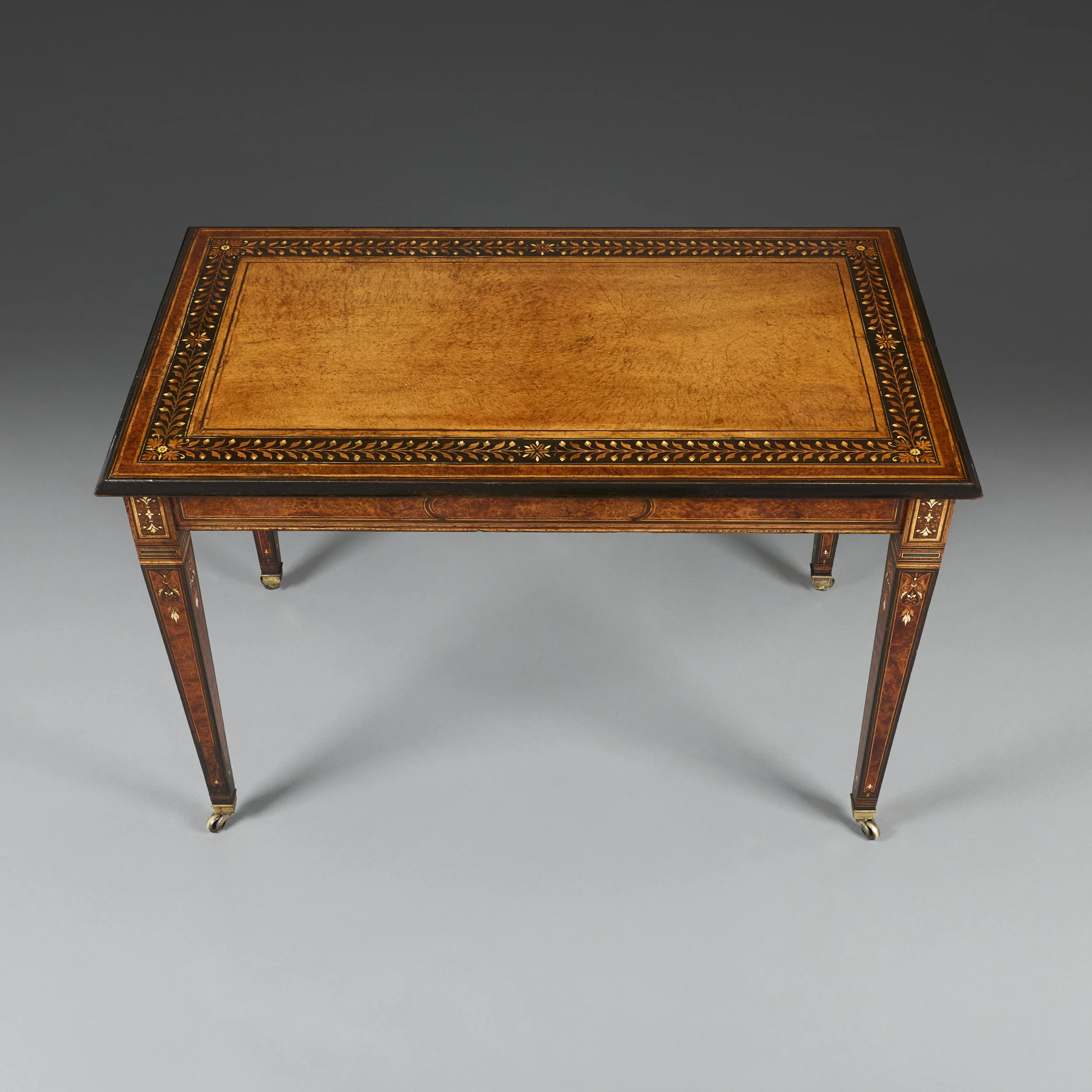
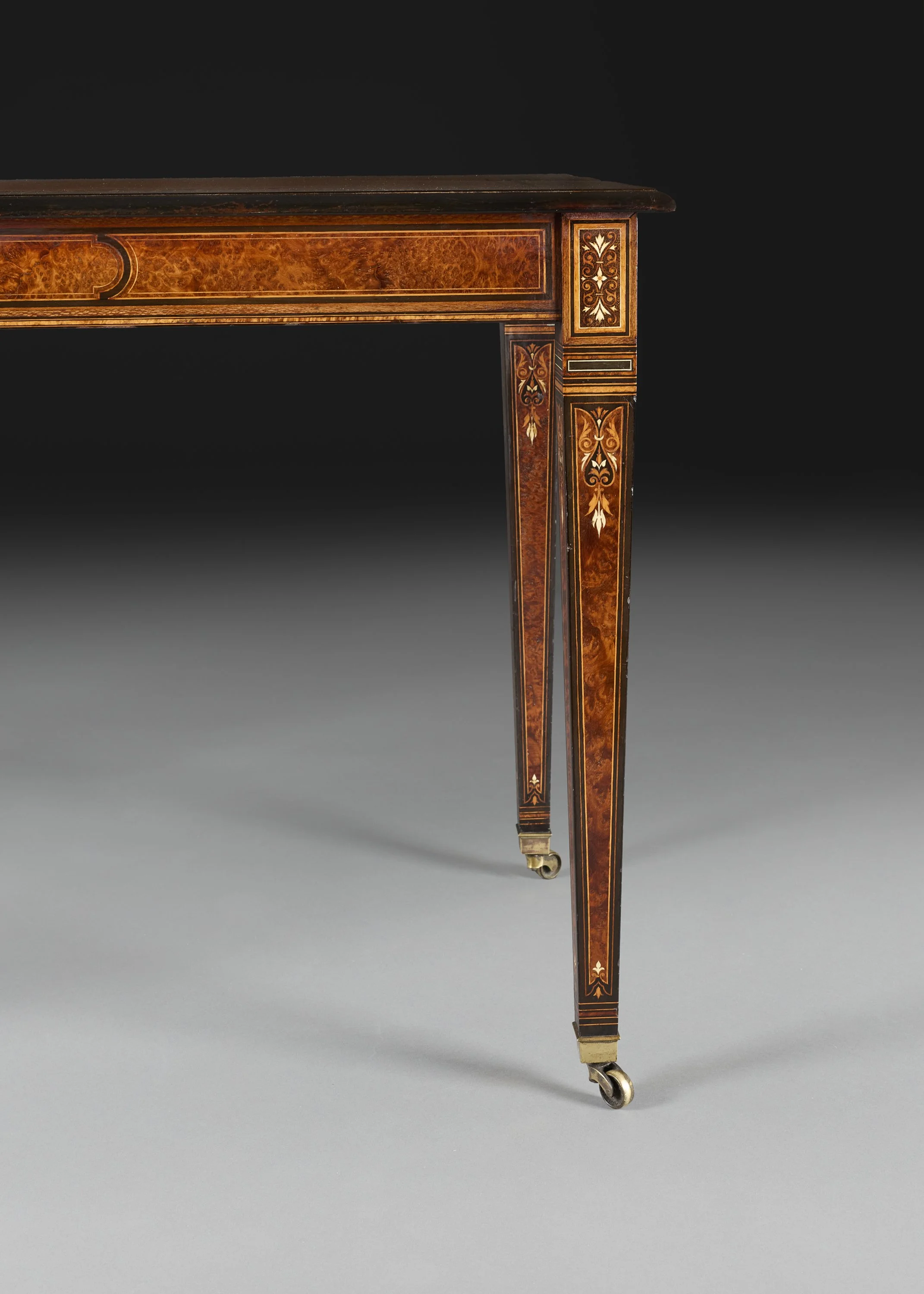
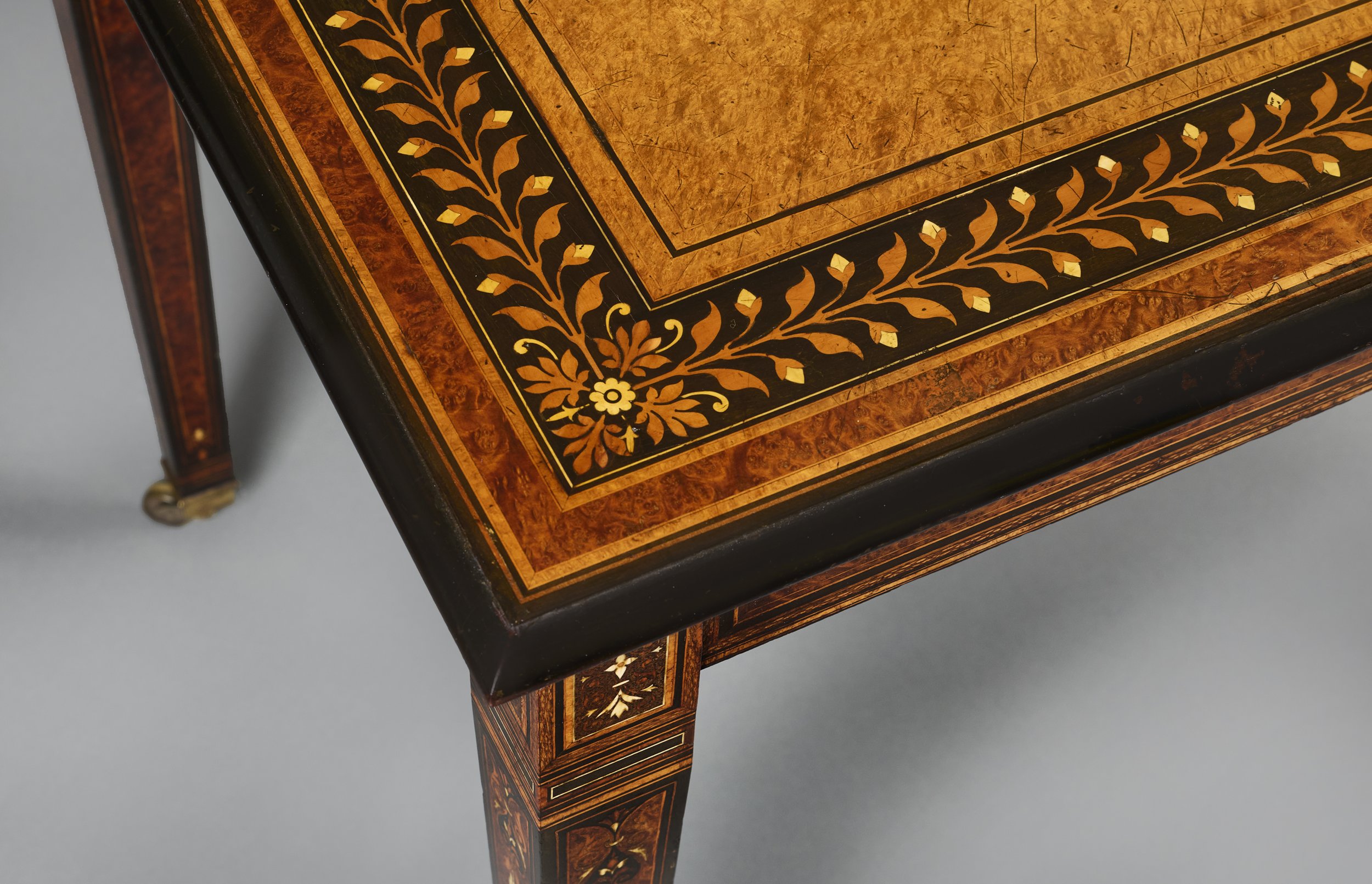
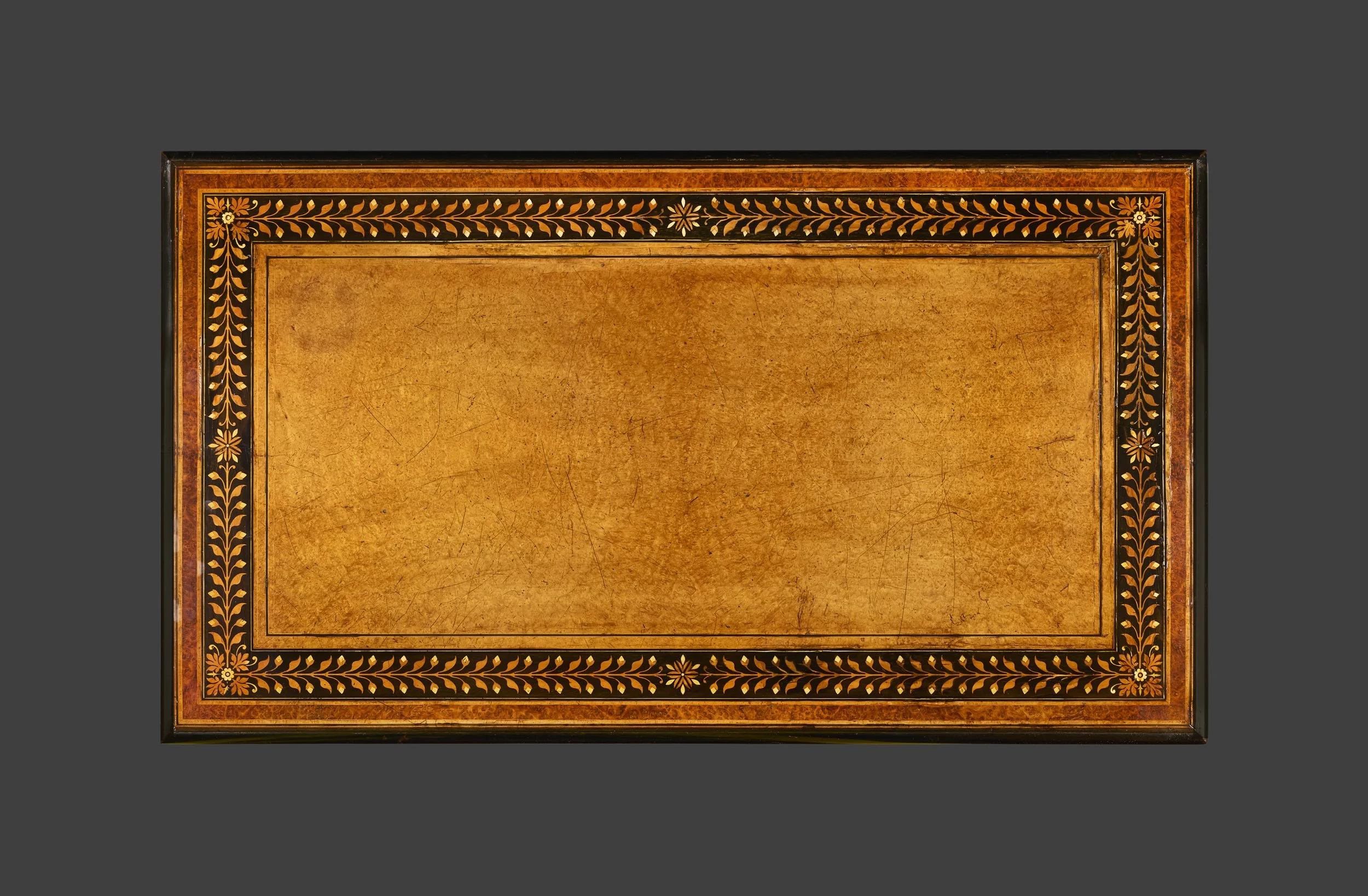
An exceptional nineteenth century amboyna and ebony table firmly attributed to Holland & Sons, the rectangular top decorated with marquetry banding of foliate design, above a plain frieze raised on square tapering legs with brass caps and castors.
Height 73.00cm
Width 107.00cm
Depth 60.50cm
Holland and Sons, was first established as Taprell and Holland in 1803 in reference to its two founders. Following a brief period in which the firm was known as Taprell, Holland & Son c.1835-43, William Holland gained sole command of the firm after the retirement from the business of the senior partner, Stephen Taprell. From 1843 onwards they were known as Holland and Sons and were quick to obtain numerous exclusive and significant commissions, as well as working for important clients. Indeed by 1851, when the company was based in Mount Street and employed 351 people, Queen Victoria had already commissioned the execution of numerous exceptional pieces of furniture for the Royal households of Balmoral, Sandringham, Windsor and Osborne House.
During the latter half of the 19th century, Holland and Sons also supplied furniture for such notable London clubs as the Athenaeum, the Reform club and the Oxford and Cambridge club. On top of furnishing a number of government buildings, the firm also supplied pieces for various British and European exhibitions, including the famous Great Exhibtion of 1851. Their output included works in a vast array of revival styles ranging from Louis XV, Louis XVI and Neoclassical, Elizabethan and Gothic, to name but a few. Sadly in 1942 they terminated trading altogether. The above lot is most likely one executed by Holland and Sons during the peak early Victorian period of their productivity and renown.
England, circa 1850
An exceptional nineteenth century amboyna and ebony table firmly attributed to Holland & Sons, the rectangular top decorated with marquetry banding of foliate design, above a plain frieze raised on square tapering legs with brass caps and castors.
Height 73.00cm
Width 107.00cm
Depth 60.50cm
Holland and Sons, was first established as Taprell and Holland in 1803 in reference to its two founders. Following a brief period in which the firm was known as Taprell, Holland & Son c.1835-43, William Holland gained sole command of the firm after the retirement from the business of the senior partner, Stephen Taprell. From 1843 onwards they were known as Holland and Sons and were quick to obtain numerous exclusive and significant commissions, as well as working for important clients. Indeed by 1851, when the company was based in Mount Street and employed 351 people, Queen Victoria had already commissioned the execution of numerous exceptional pieces of furniture for the Royal households of Balmoral, Sandringham, Windsor and Osborne House.
During the latter half of the 19th century, Holland and Sons also supplied furniture for such notable London clubs as the Athenaeum, the Reform club and the Oxford and Cambridge club. On top of furnishing a number of government buildings, the firm also supplied pieces for various British and European exhibitions, including the famous Great Exhibtion of 1851. Their output included works in a vast array of revival styles ranging from Louis XV, Louis XVI and Neoclassical, Elizabethan and Gothic, to name but a few. Sadly in 1942 they terminated trading altogether. The above lot is most likely one executed by Holland and Sons during the peak early Victorian period of their productivity and renown.