- Mirrors
- A FINE PAIR OF 19TH CENTURY ITALIAN GILTWOOD MIRRORS
A FINE PAIR OF 19TH CENTURY ITALIAN GILTWOOD MIRRORS
A FINE PAIR OF 19TH CENTURY ITALIAN GILTWOOD MIRRORS
Italy, circa 1820
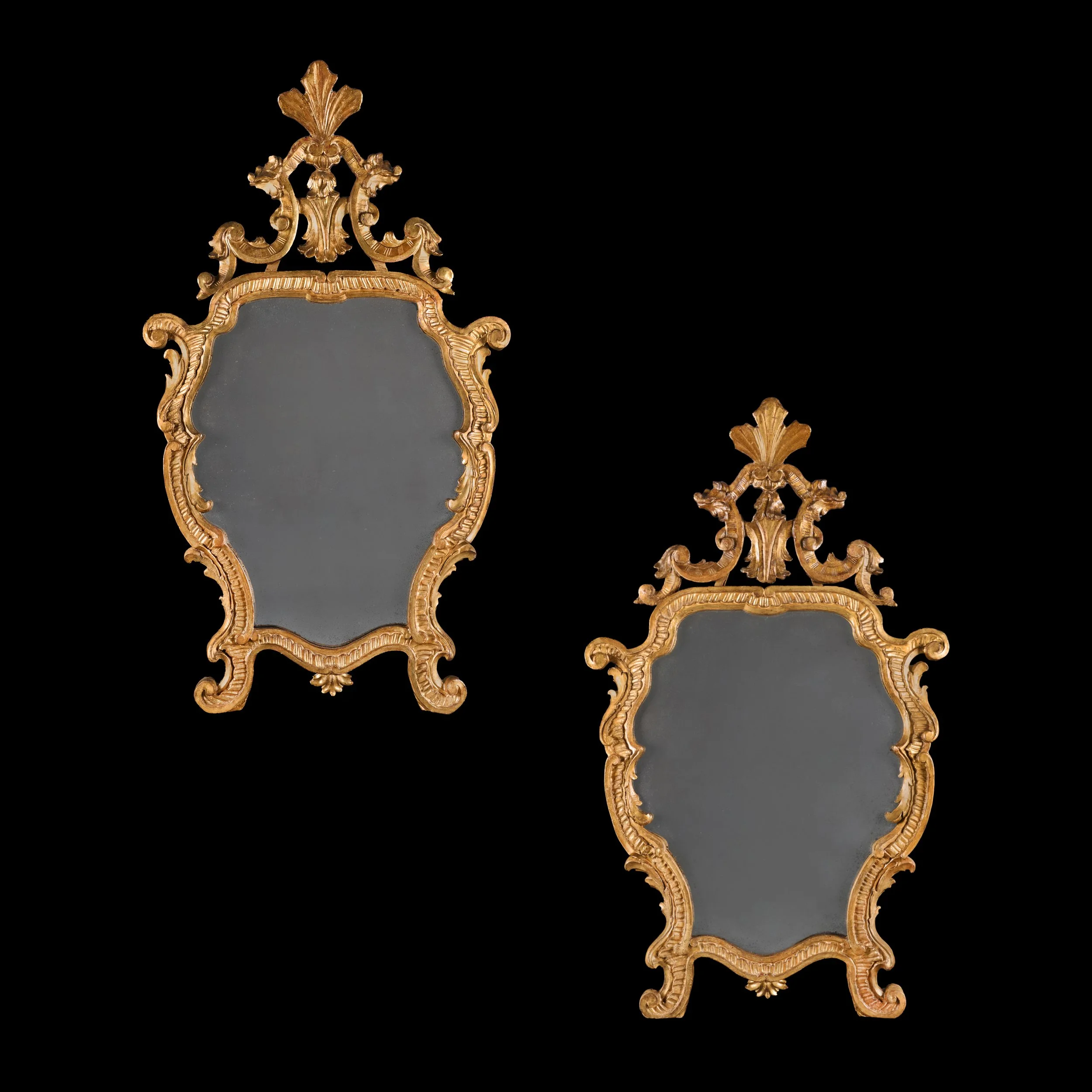
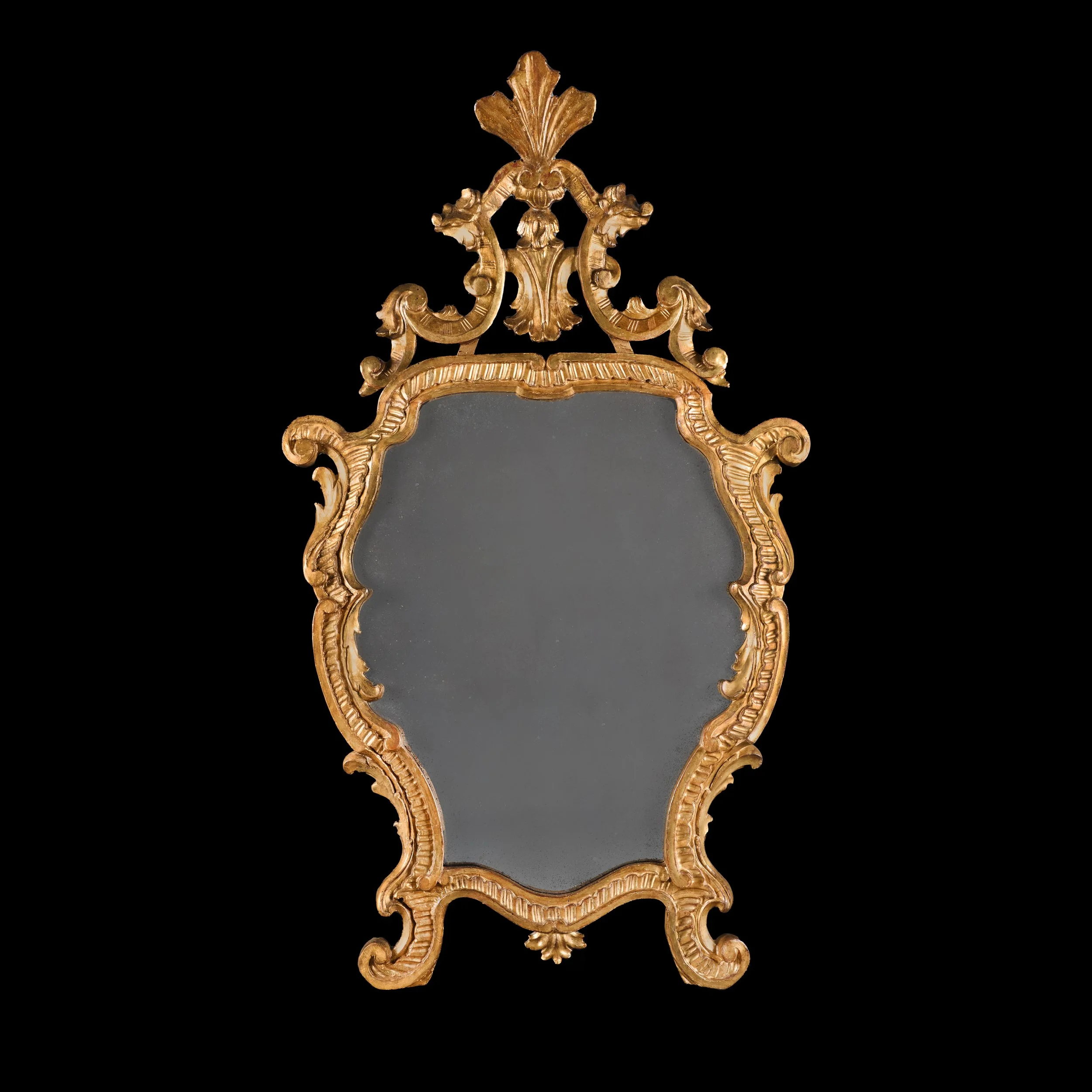
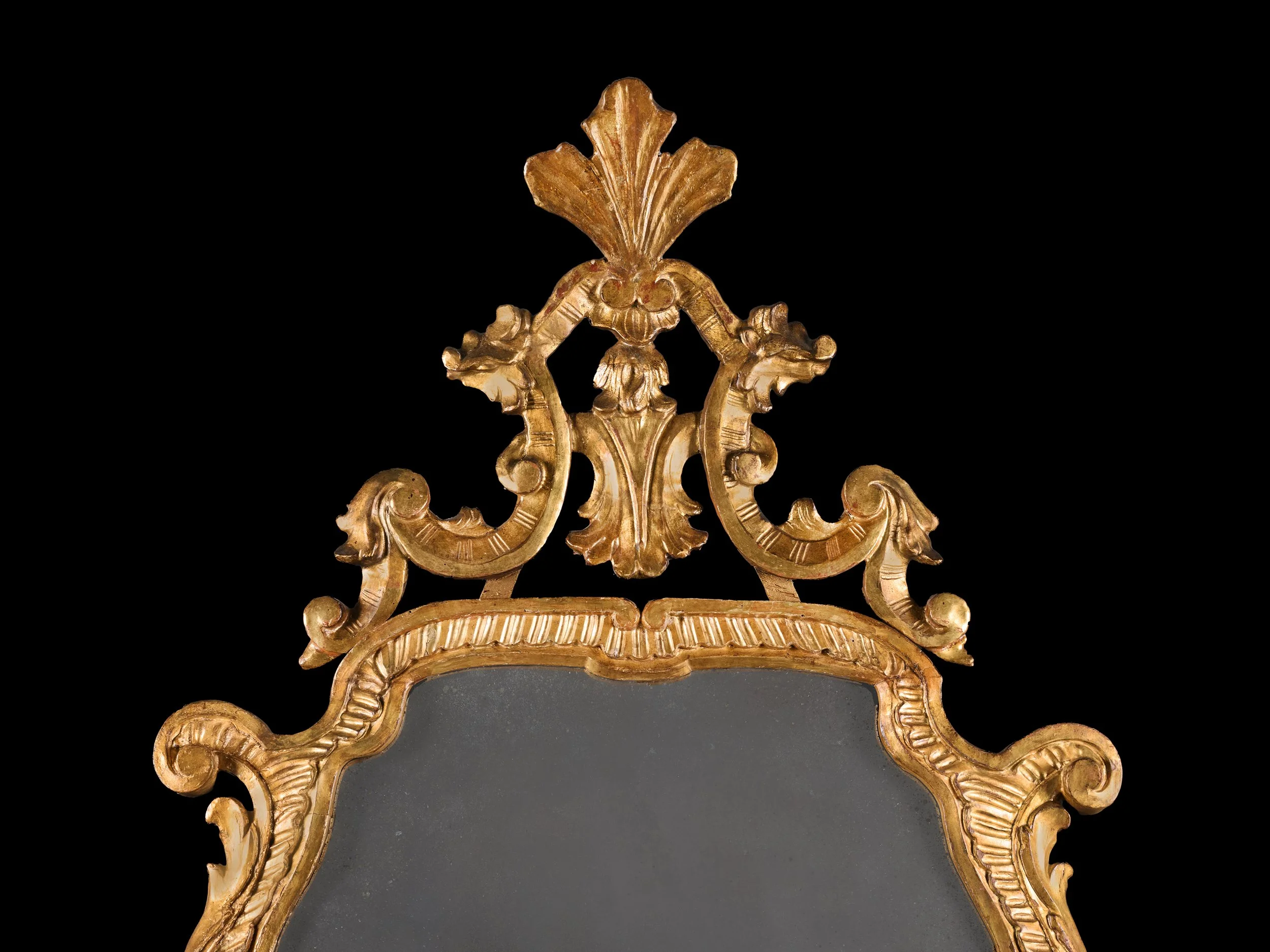
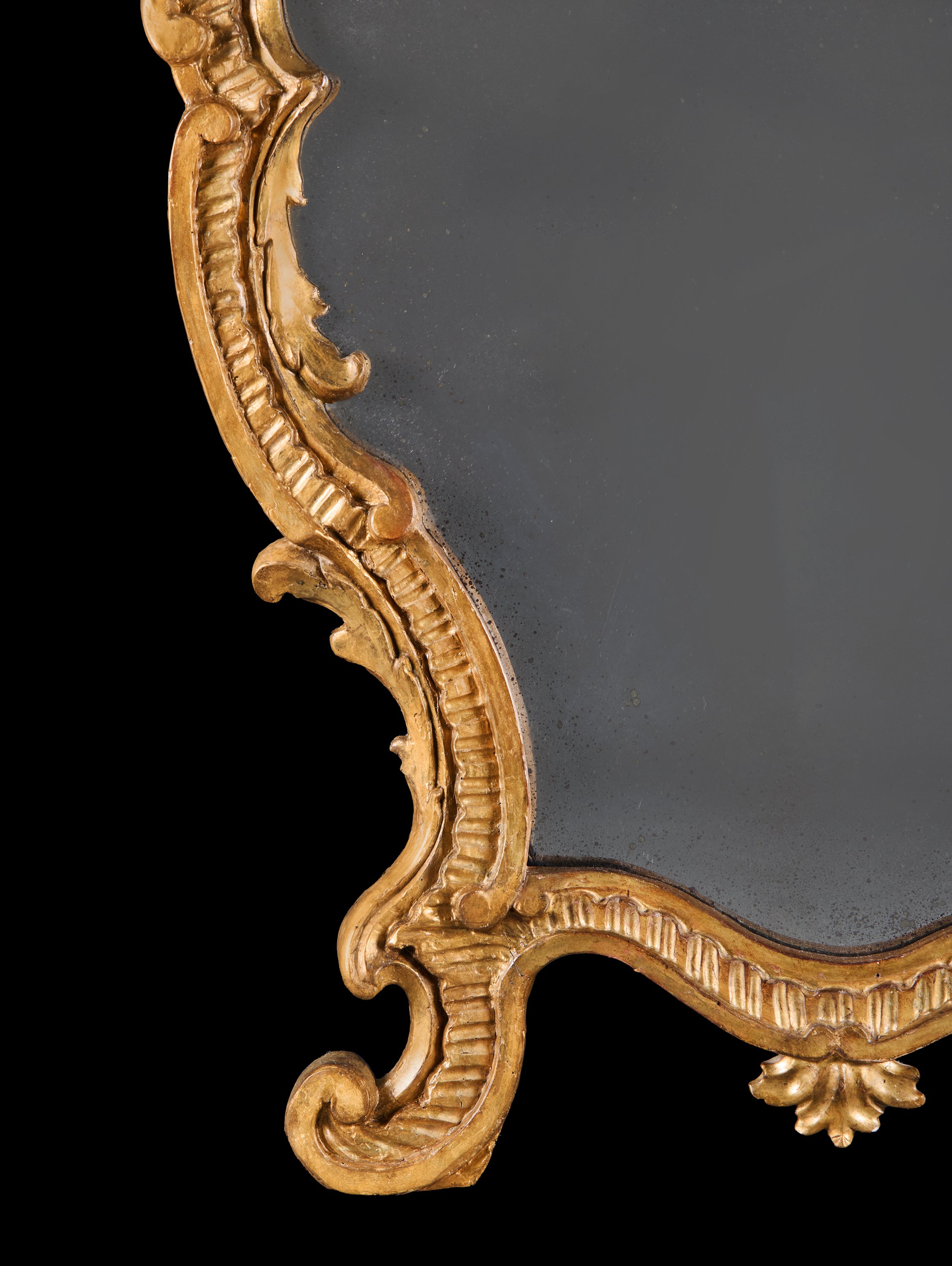
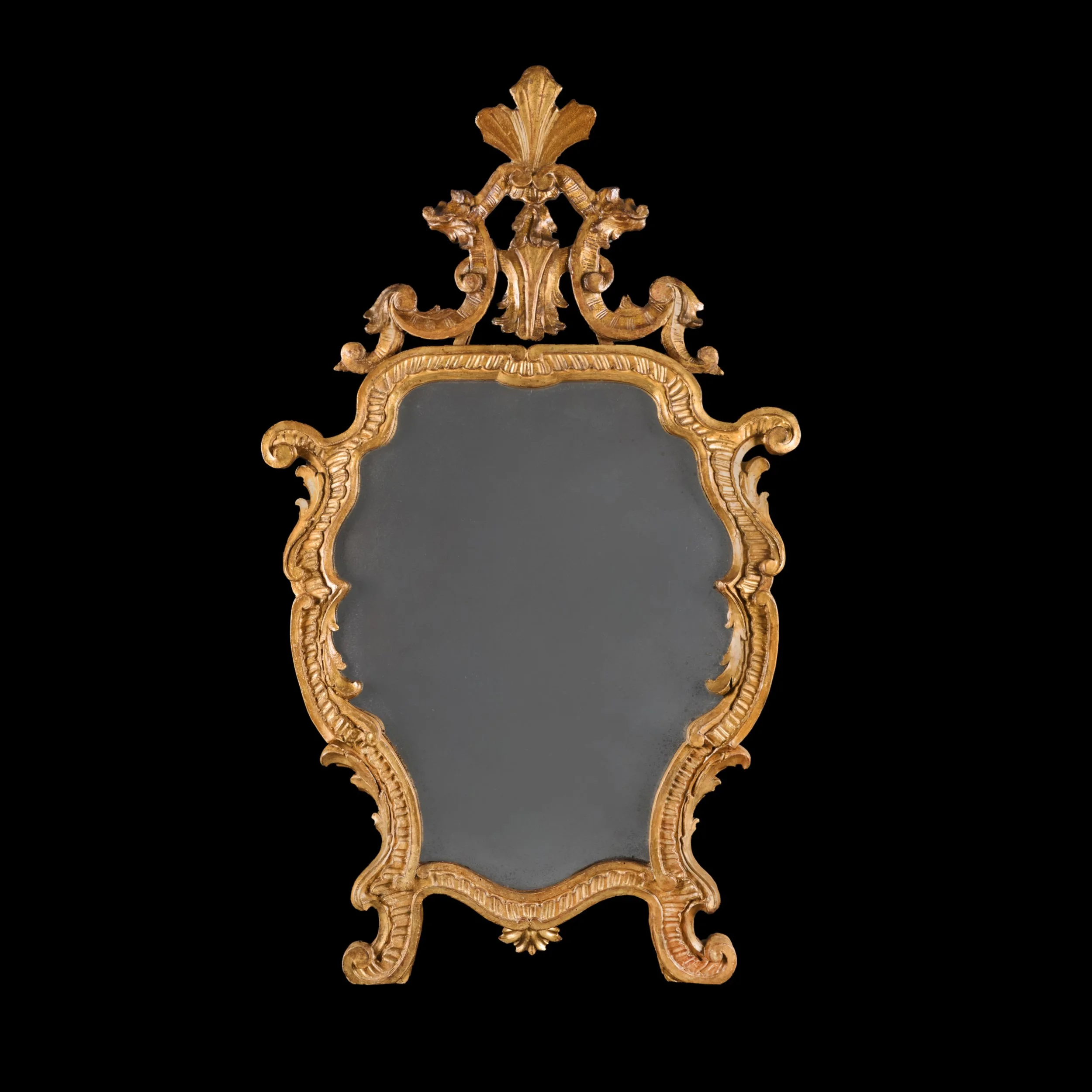
A pair of early 19th century Tuscan giltwood mirrors of cartouche form with cut lozenge decoration to the frames, rococo scrolls at the shoulders and bases, each surmounted by an elaborate pierced rocaille cresting of foliate design.
Height 136.00cm
Width 80.00cm
Italian 19th century giltwood mirrors are highly sought after pieces recognised by their elaborate, hand-carved designs and use of traditional gilding techniques often inspired by earlier Renaissance, Baroque and Rococo styles. These mirrors are typically made from wood which is then meticulously carved by skilled craftsmen. A gesso base was then applied to create a smooth surface, followed by red or yellow clay-like bole, which was finally finished with gold leaf using traditional water gilding methods. This produced a luminous, reflective surface which develops a unique patina over time.
Italy, circa 1820
A pair of early 19th century Tuscan giltwood mirrors of cartouche form with cut lozenge decoration to the frames, rococo scrolls at the shoulders and bases, each surmounted by an elaborate pierced rocaille cresting of foliate design.
Height 136.00cm
Width 80.00cm
Italian 19th century giltwood mirrors are highly sought after pieces recognised by their elaborate, hand-carved designs and use of traditional gilding techniques often inspired by earlier Renaissance, Baroque and Rococo styles. These mirrors are typically made from wood which is then meticulously carved by skilled craftsmen. A gesso base was then applied to create a smooth surface, followed by red or yellow clay-like bole, which was finally finished with gold leaf using traditional water gilding methods. This produced a luminous, reflective surface which develops a unique patina over time.