- Mirrors
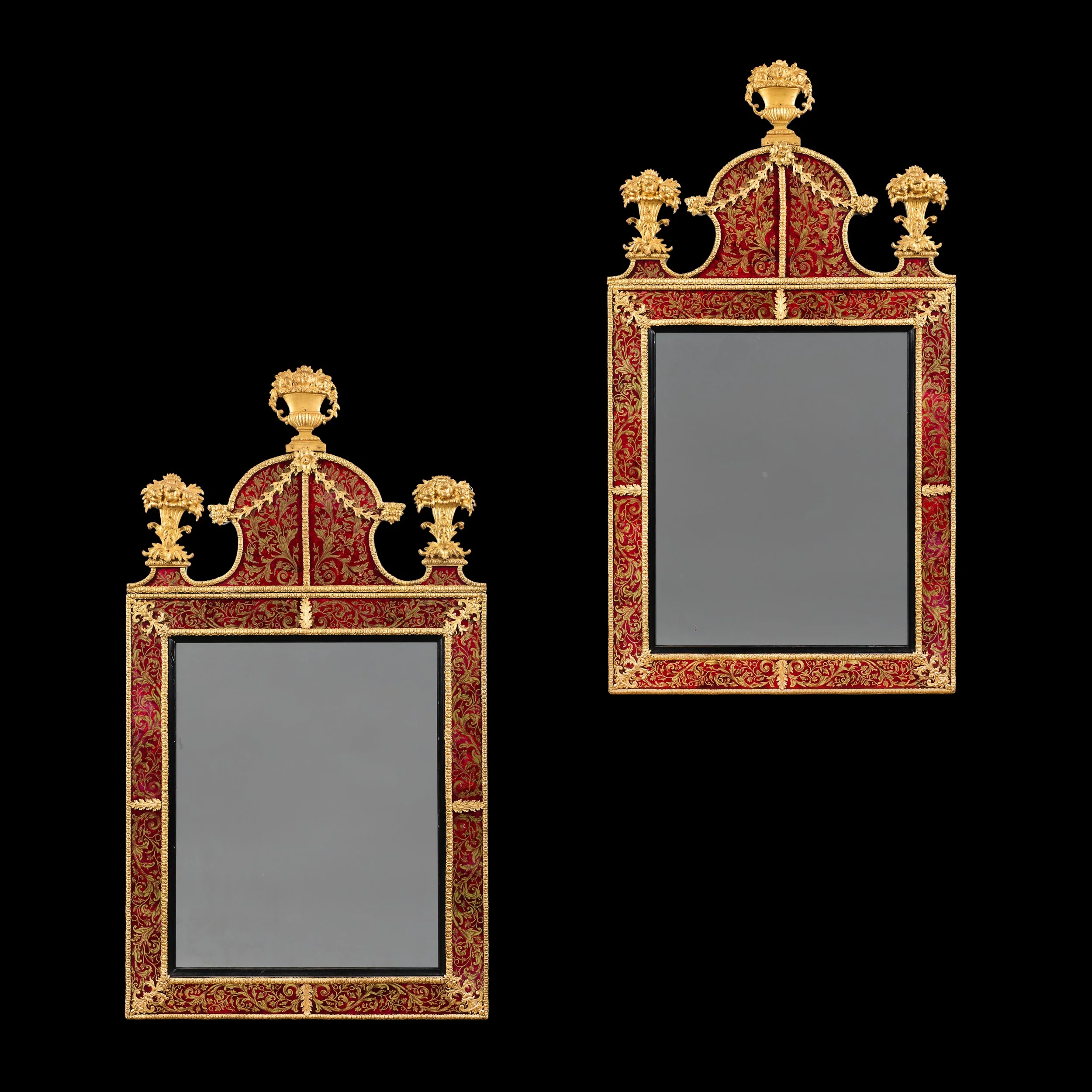
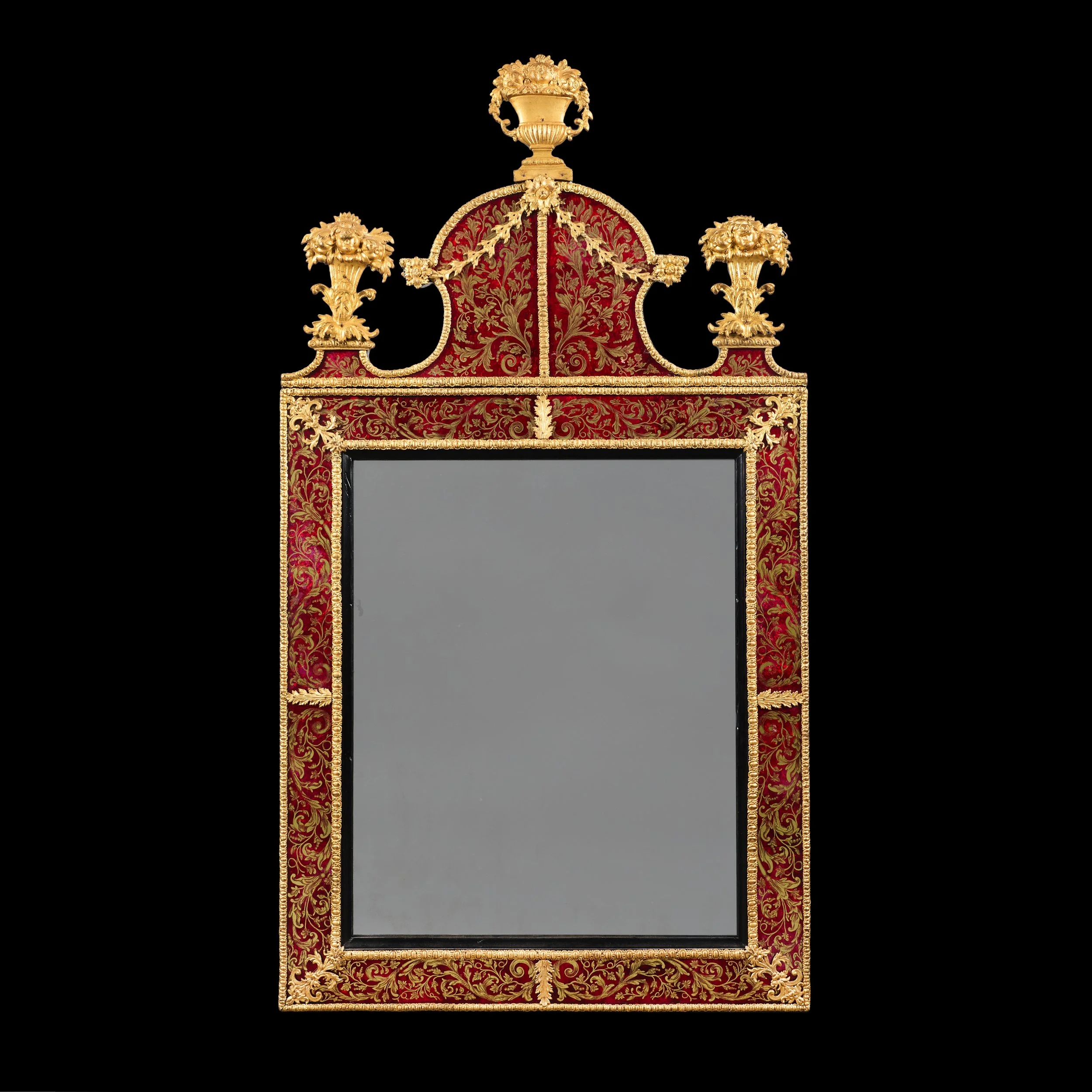
- A FINE PAIR OF RED VERRE EGLOMISE MIRRORS AFTER BURCHARD PRECHT
A FINE PAIR OF RED VERRE EGLOMISE MIRRORS AFTER BURCHARD PRECHT
A FINE PAIR OF RED VERRE EGLOMISE MIRRORS AFTER BURCHARD PRECHT
Sweden, circa 1850
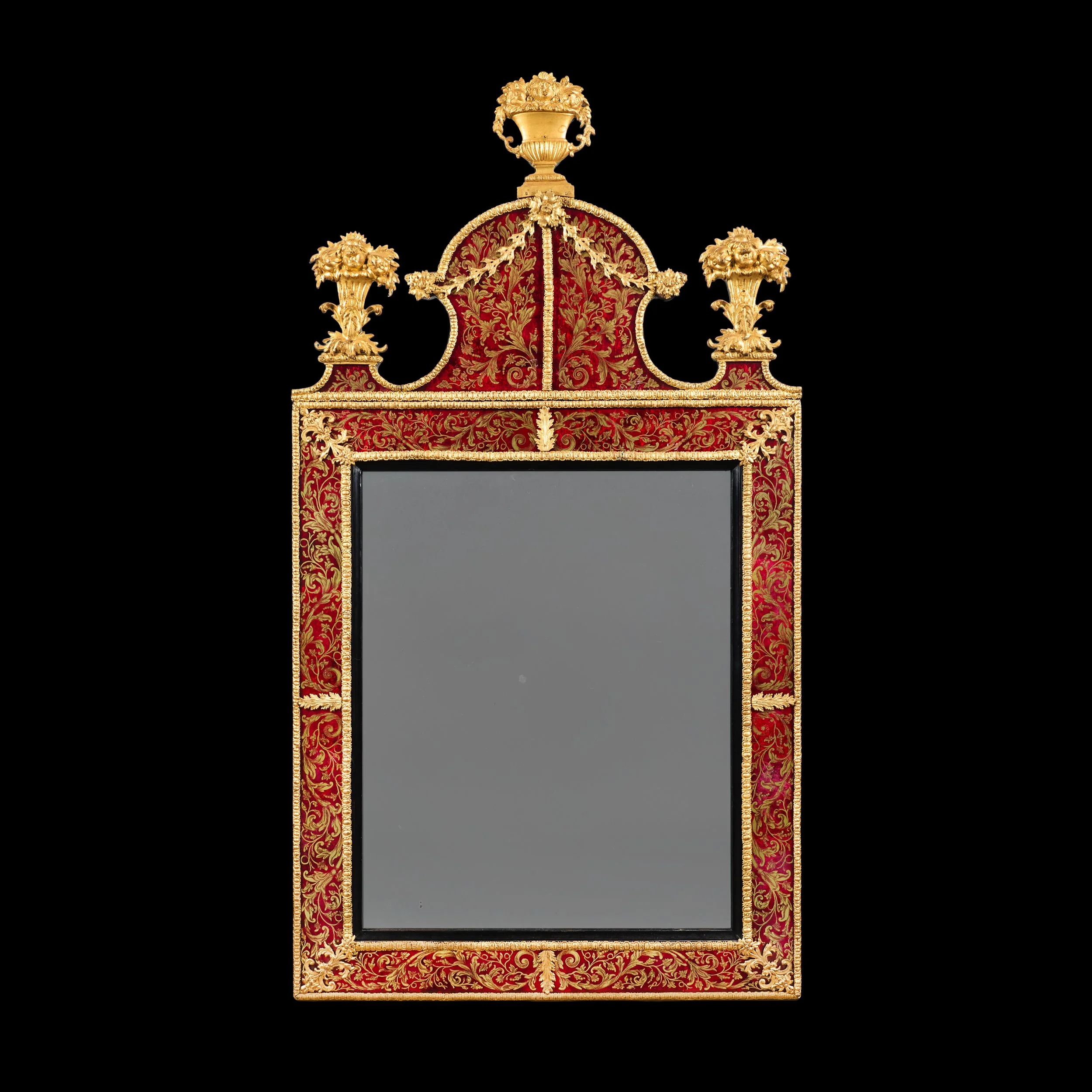
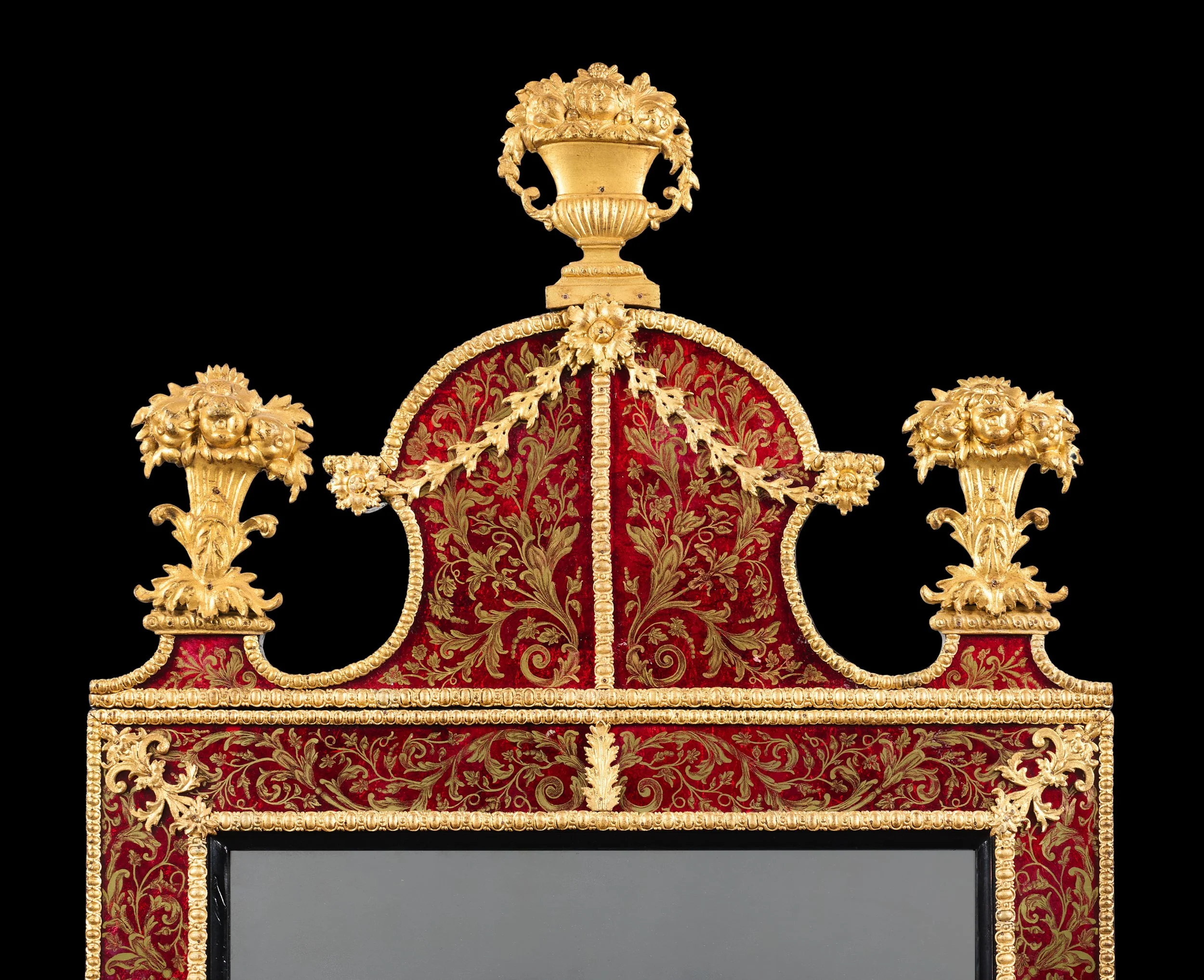
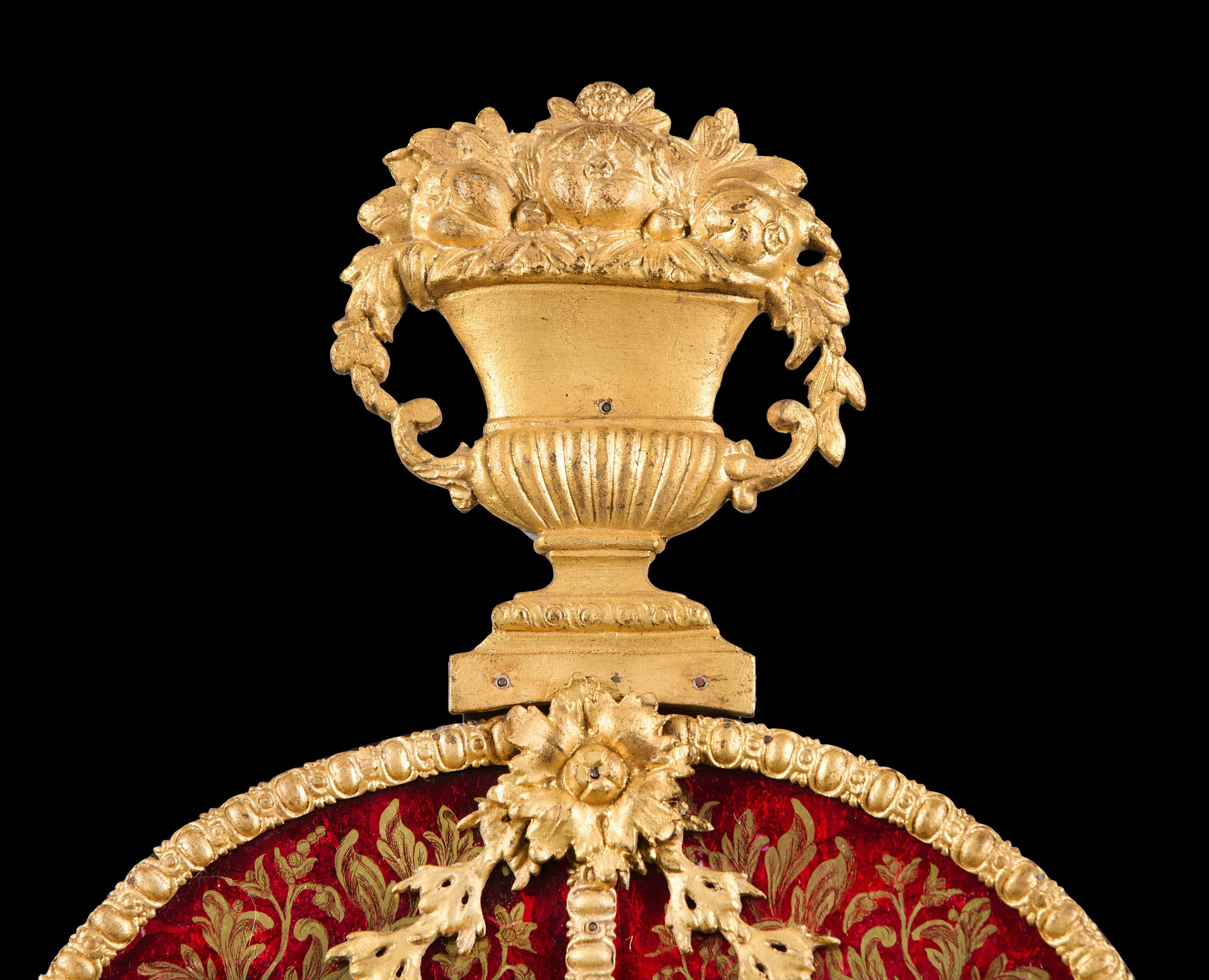
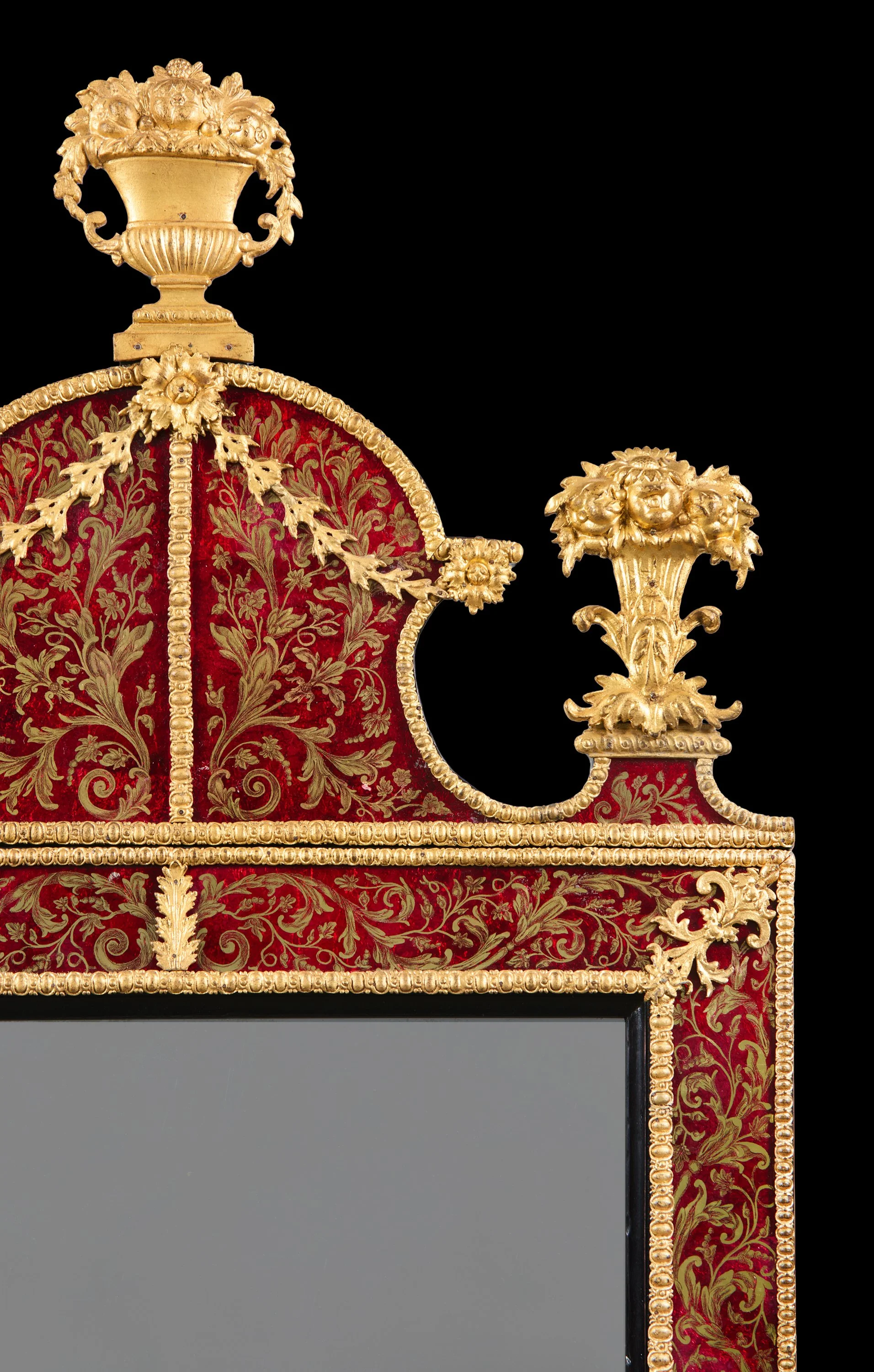
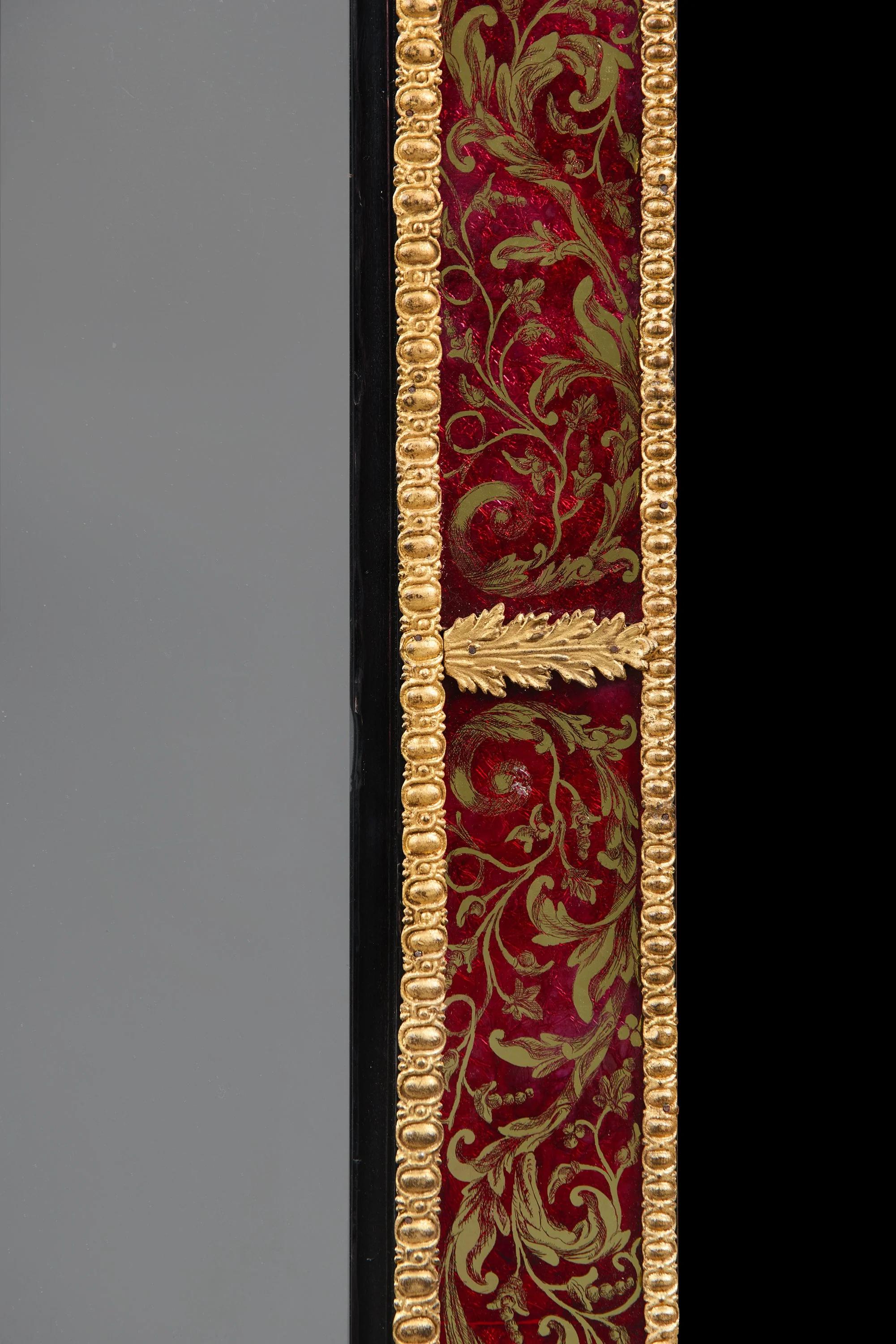
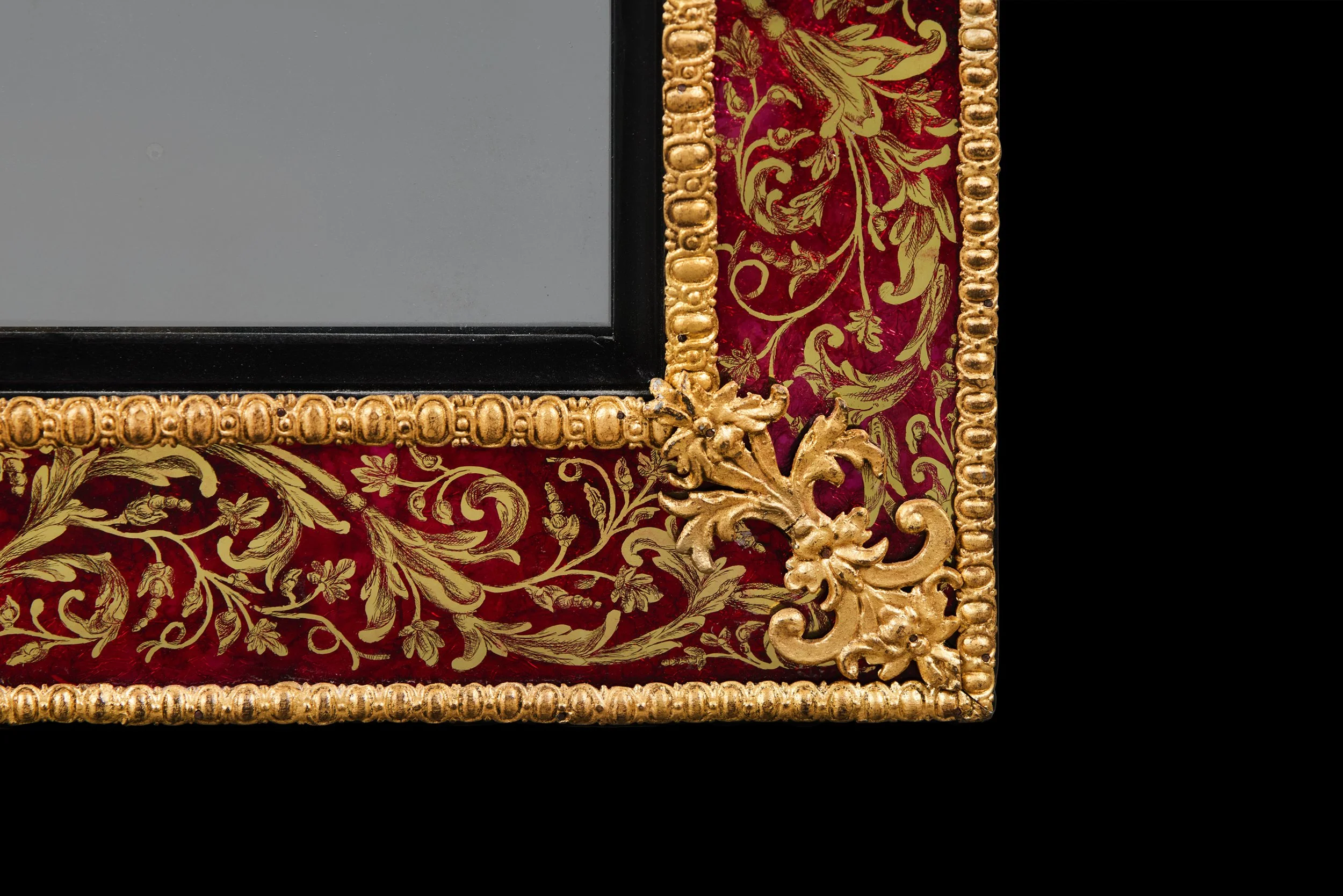
A fine pair of mid nineteenth century red verre eglomise mirrors, with scrolling gilt foliate decoration, with shaped cresting and gilt lead mounts to the borders throughout. After Burchardt Precht.
Height 103.00cm
Width 57.00cm
Burchard Precht (1651-1738) was a sculptor and cabinetmaker from Bremen, trained in Hamburg by his brother Christian Precht (1635-1694). He established his workshop in Sweden, arriving there in 1674 to participate in the work undertaken at Drottningholm Palace and was appointed court sculptor in 1682.
The shape of Scandinavian mirrors and the use of beaded borders reflect his taste for France, which he visited with the court architect Nicodemus Tessin in 1687-1688. Furthermore, the characteristic presence of this type of pediment, with its double C-shaped scrolls and fruit baskets, as well as the use of gilt lead, is typical of his work.
A similar mirror can be found in the former Wrightsman Collection, illustrated in F.J.B. Watson, The Wrightsman Collection, volume II, New York, 1966, no. 209, pl. 395 as well as a mirror illustrated in S. Roche, Mirror, New York, 1985, plate VII.
The presence of red and gold verre eglomisé is quite exceptional on this type of mirror, and of great finesse like the mirror from the Stephen C. Hilbert collection, sold by Sotheby’s New York, on May 24, 2007, lot 94 (sold $114,000).
Sweden, circa 1850
A fine pair of mid nineteenth century red verre eglomise mirrors, with scrolling gilt foliate decoration, with shaped cresting and gilt lead mounts to the borders throughout. After Burchardt Precht.
Height 103.00cm
Width 57.00cm
Burchard Precht (1651-1738) was a sculptor and cabinetmaker from Bremen, trained in Hamburg by his brother Christian Precht (1635-1694). He established his workshop in Sweden, arriving there in 1674 to participate in the work undertaken at Drottningholm Palace and was appointed court sculptor in 1682.
The shape of Scandinavian mirrors and the use of beaded borders reflect his taste for France, which he visited with the court architect Nicodemus Tessin in 1687-1688. Furthermore, the characteristic presence of this type of pediment, with its double C-shaped scrolls and fruit baskets, as well as the use of gilt lead, is typical of his work.
A similar mirror can be found in the former Wrightsman Collection, illustrated in F.J.B. Watson, The Wrightsman Collection, volume II, New York, 1966, no. 209, pl. 395 as well as a mirror illustrated in S. Roche, Mirror, New York, 1985, plate VII.
The presence of red and gold verre eglomisé is quite exceptional on this type of mirror, and of great finesse like the mirror from the Stephen C. Hilbert collection, sold by Sotheby’s New York, on May 24, 2007, lot 94 (sold $114,000).