- Cabinets & Chests
- AN UNUSUAL SHERATON PERIOD ARCHITECTURAL CABINET
AN UNUSUAL SHERATON PERIOD ARCHITECTURAL CABINET
AN UNUSUAL SHERATON PERIOD ARCHITECTURAL CABINET
England, circa 1780
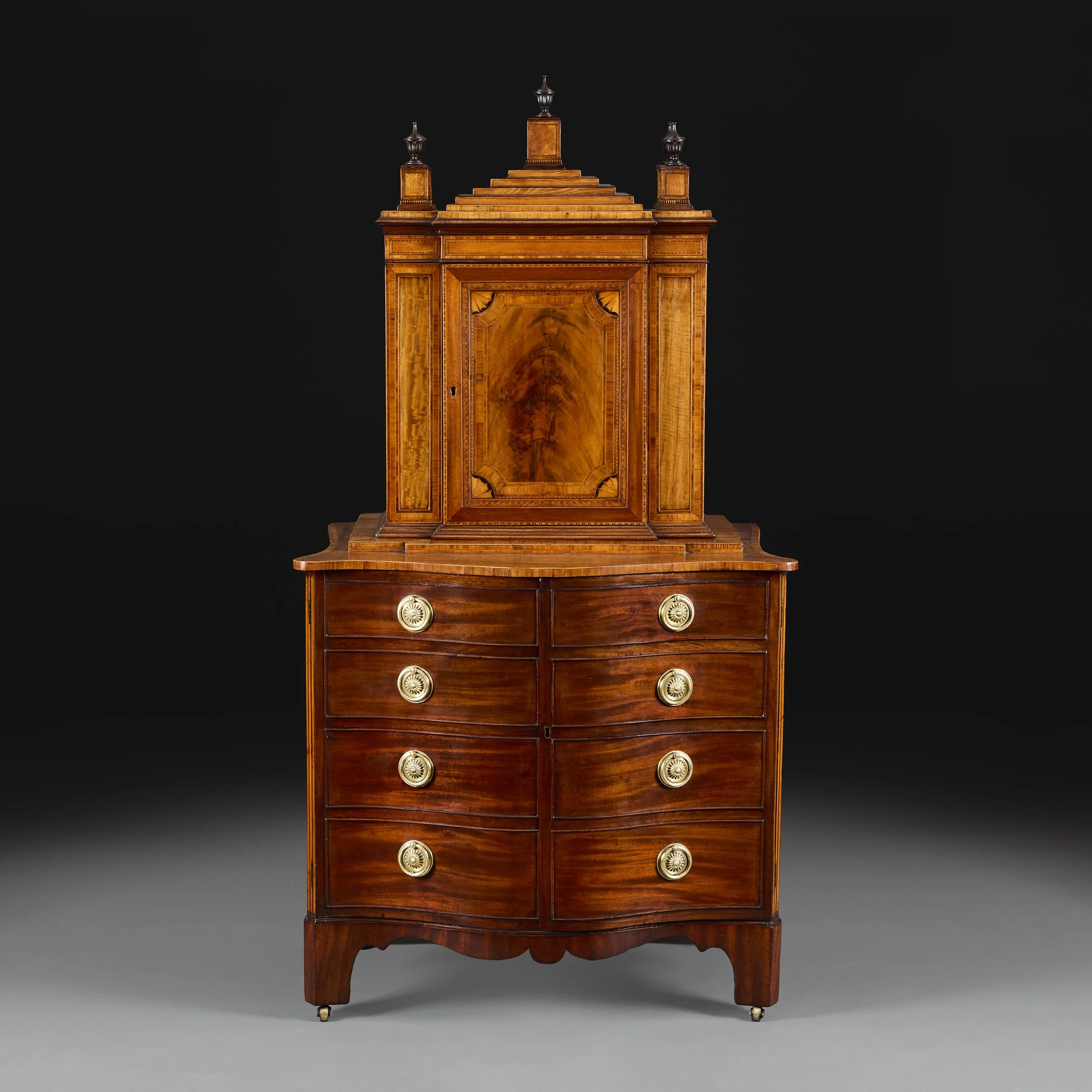
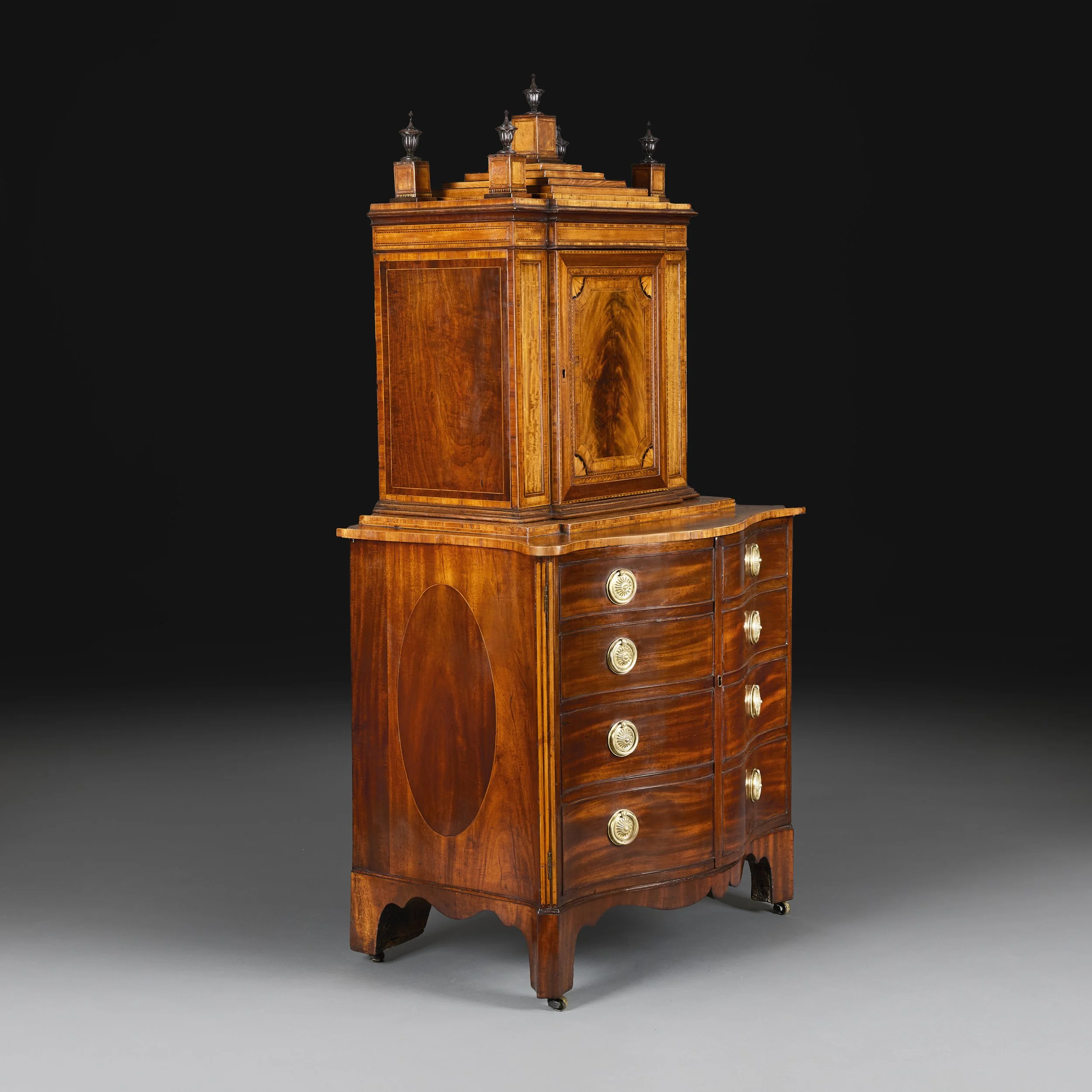
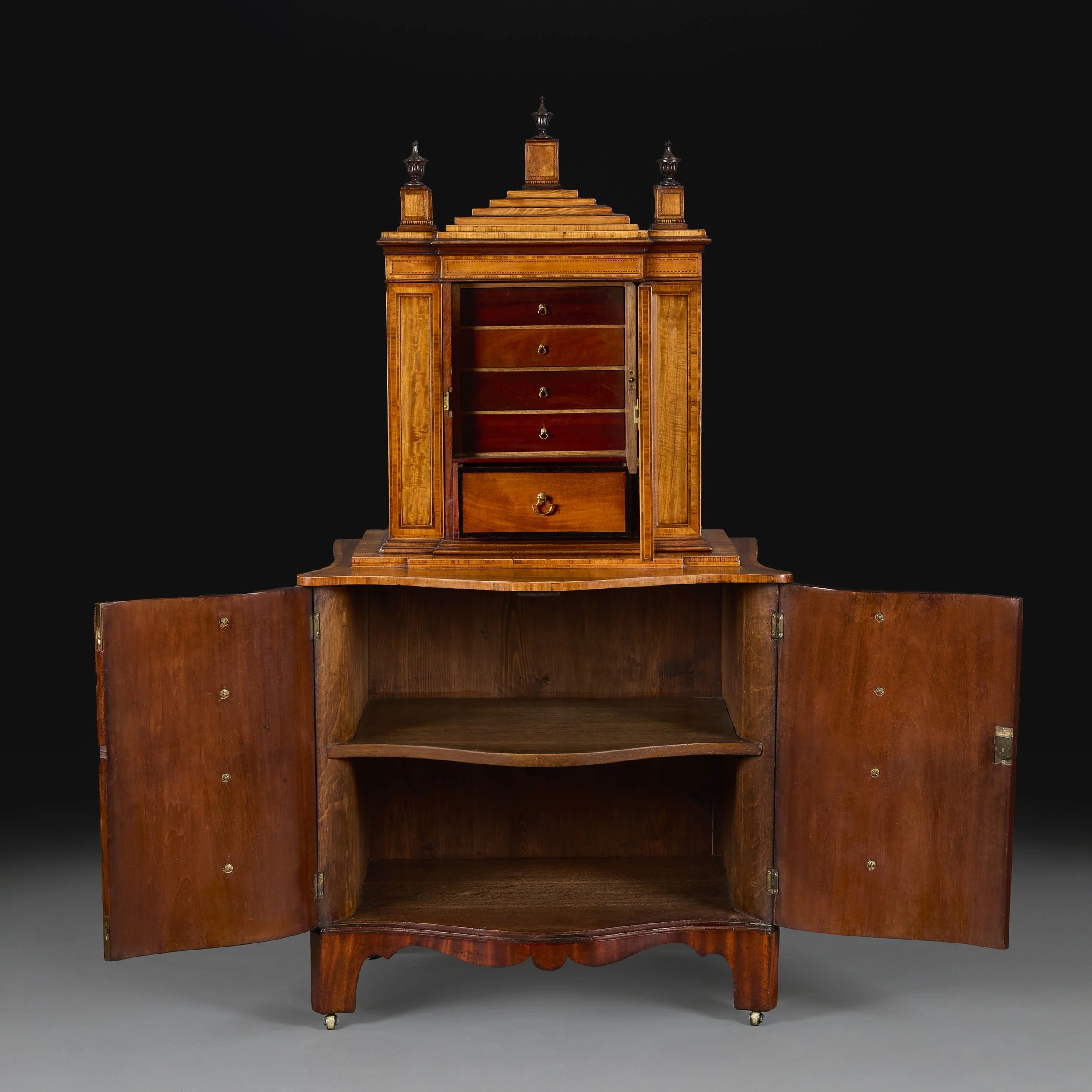
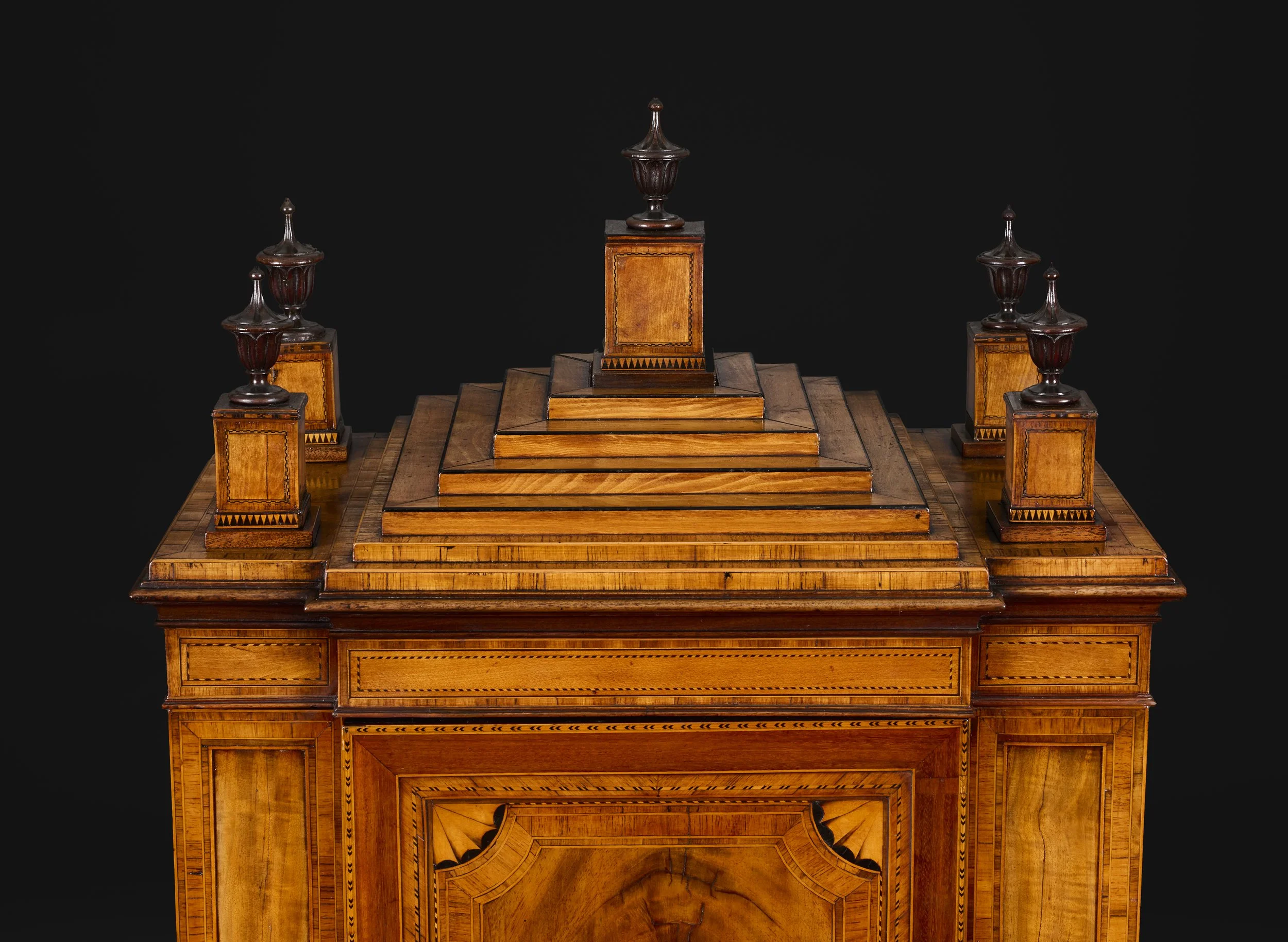
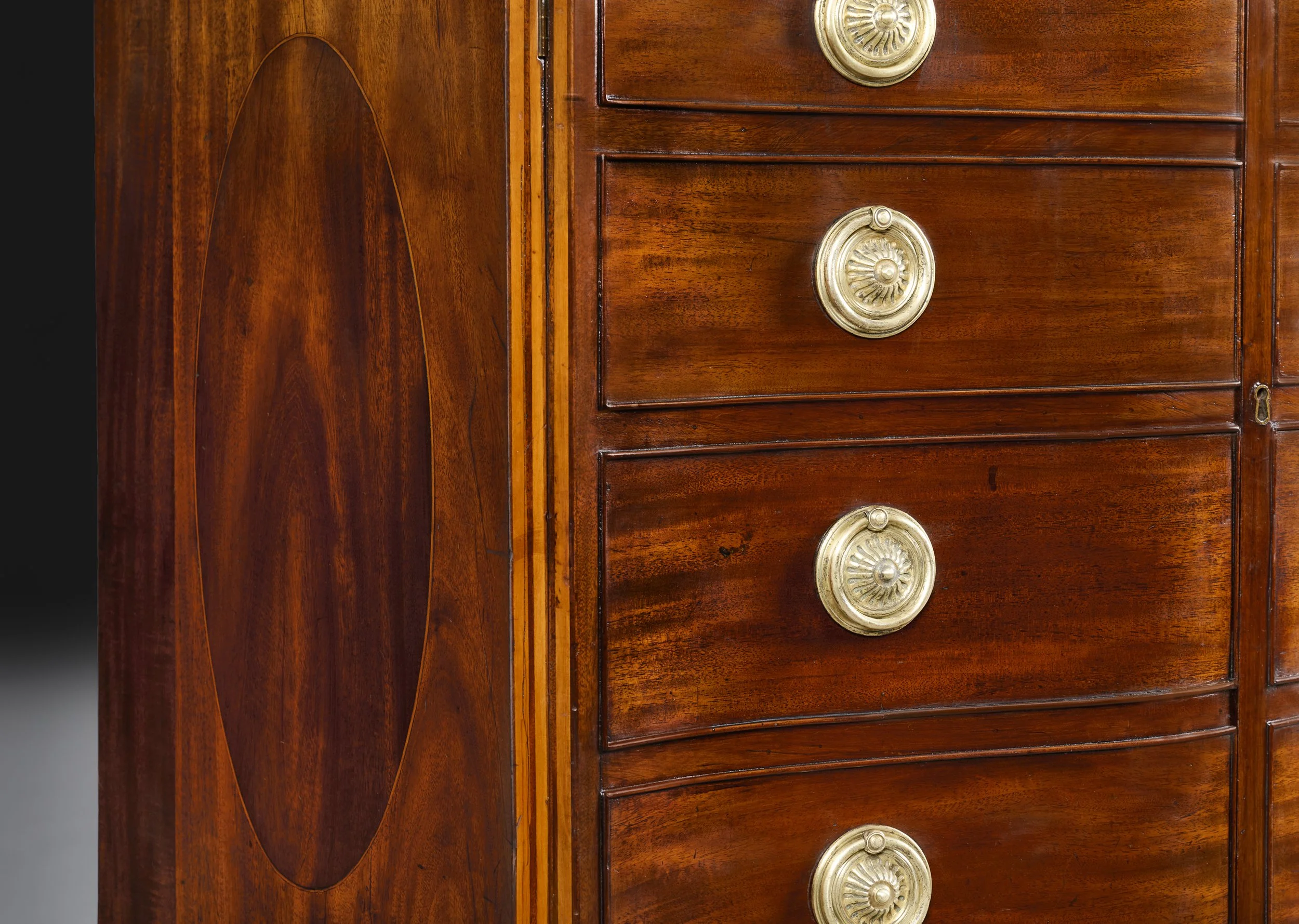
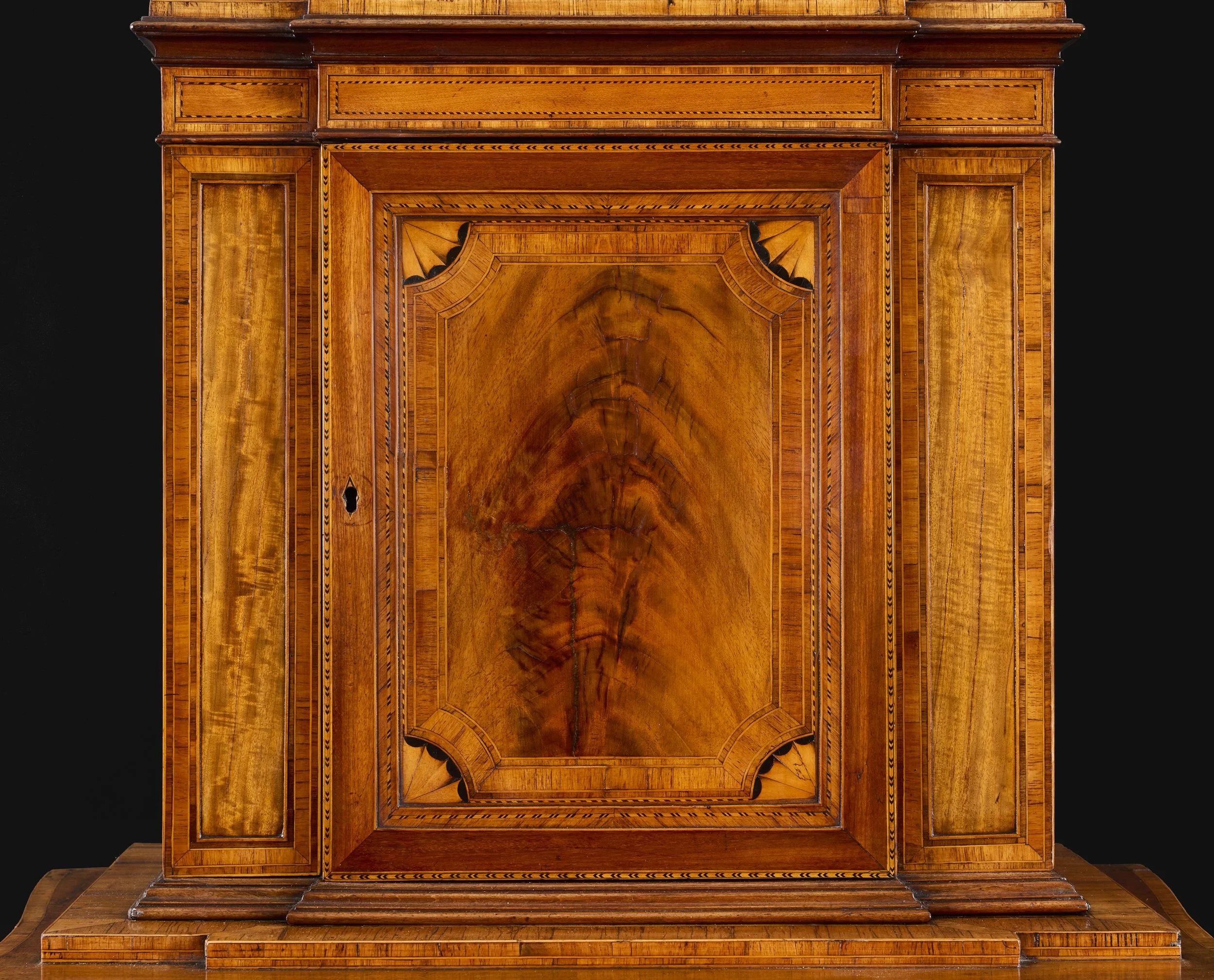
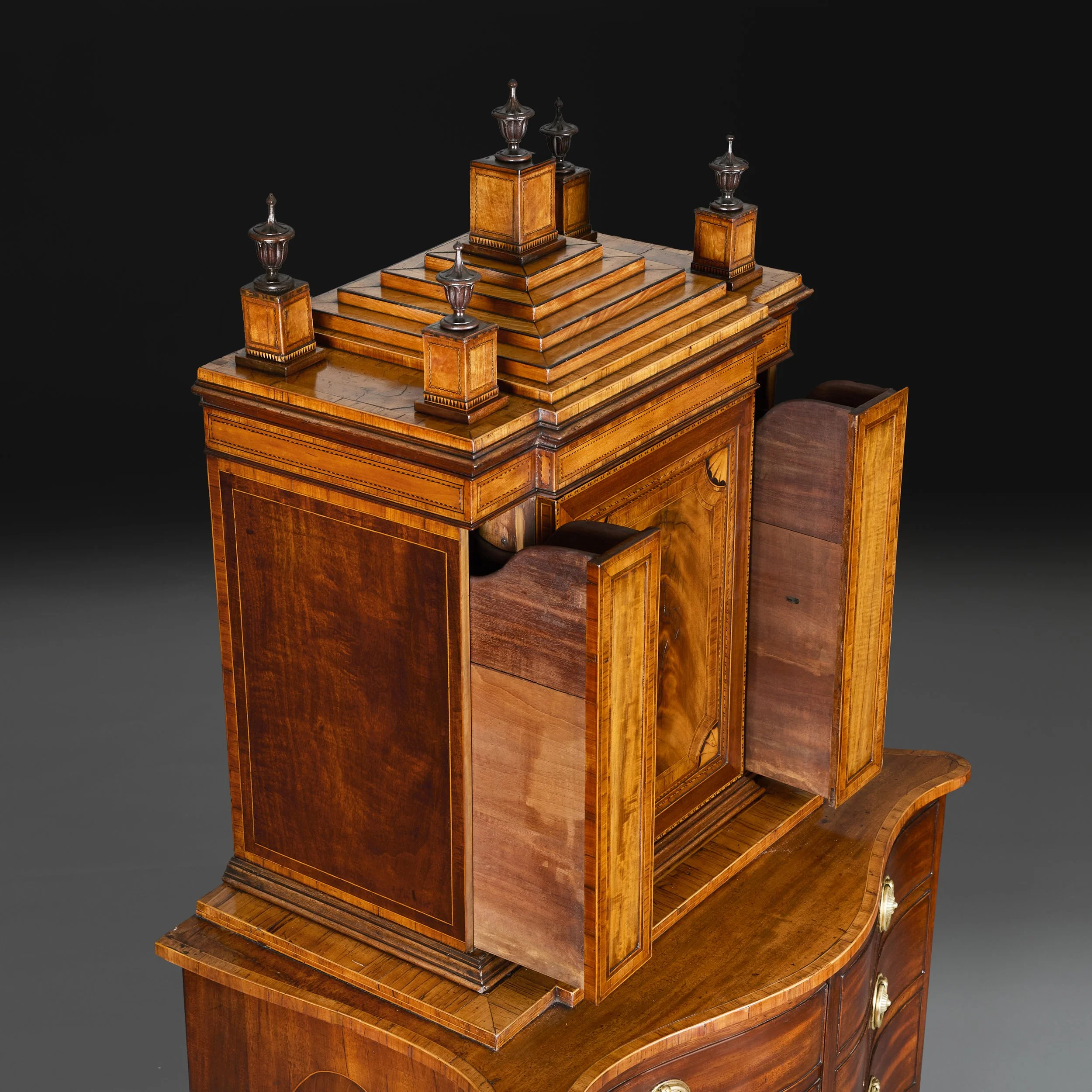
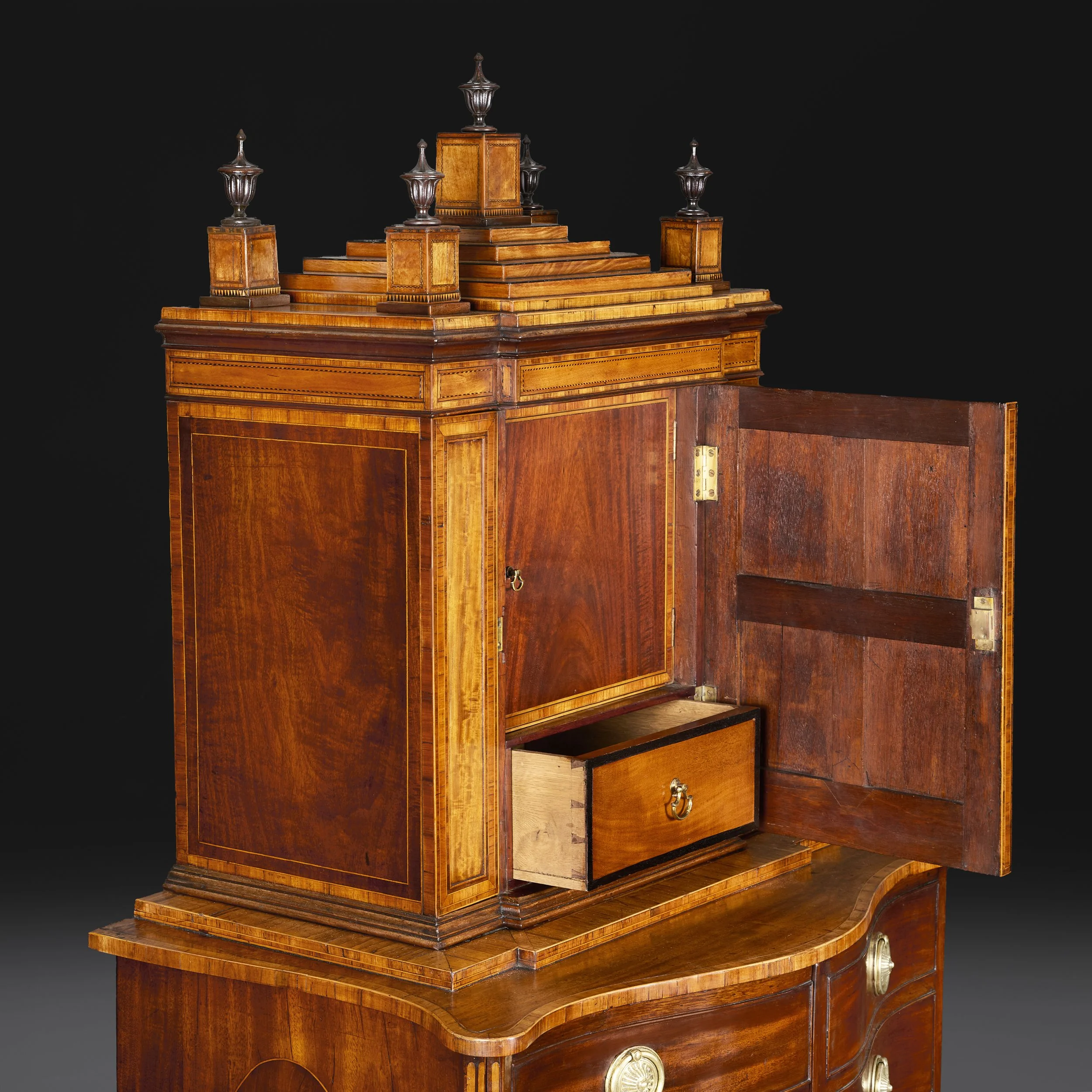
A late eighteenth century mahogany architectural cabinet of rare form, most likely a special commission, the top section with stepped pediment and five finely turned finials, the central door opening to reveal a lower drawer and further cabinet with three internal draws, the lower section of serpentine form retaining the original ring handles and pulls opening to revealing one shelf, all supported on raised bracket feet and brass castors.
Height 162.00cm
Width 86.00cm
Depth 56.00cm
Sheraton Period furniture (1790-1805) was inspired by the designs of English cabinetmaker Thomas Sheraton (1751-1806). Raised in Durham and having trained as a journeyman cabinetmaker, Sheraton came to London in 1790 and had several addresses including Davies Street, Wardour Street & Golden Square. He was heavily influenced by Louis XVI style furniture and became renowned for his elegant lines, contrasting veneer inlays and lightweight rectilinear forms, many of which are typified by his furniture patterns in The Cabinet Dictionary (1803) and the Cabinet Maker's & Upholsterer's Drawing Book (1791). Sheraton was increasingly able to use exotic woods due to his rising success, and often featured satinwood, rosewood, purpleheart and tulipwood for his delicate inlays, although painted decorations were also a signature. Neoclassical swags, husks, flutings, festoons, and rams' heads are amongst the common motifs applied to pieces of this style. Other notable cabinet-makers from the Sheraton period are Seddon, Ince and Mayhew and Linnell.
England, circa 1780
A late eighteenth century mahogany architectural cabinet of rare form, most likely a special commission, the top section with stepped pediment and five finely turned finials, the central door opening to reveal a lower drawer and further cabinet with three internal draws, the lower section of serpentine form retaining the original ring handles and pulls opening to revealing one shelf, all supported on raised bracket feet and brass castors.
Height 162.00cm
Width 86.00cm
Depth 56.00cm
Sheraton Period furniture (1790-1805) was inspired by the designs of English cabinetmaker Thomas Sheraton (1751-1806). Raised in Durham and having trained as a journeyman cabinetmaker, Sheraton came to London in 1790 and had several addresses including Davies Street, Wardour Street & Golden Square. He was heavily influenced by Louis XVI style furniture and became renowned for his elegant lines, contrasting veneer inlays and lightweight rectilinear forms, many of which are typified by his furniture patterns in The Cabinet Dictionary (1803) and the Cabinet Maker's & Upholsterer's Drawing Book (1791). Sheraton was increasingly able to use exotic woods due to his rising success, and often featured satinwood, rosewood, purpleheart and tulipwood for his delicate inlays, although painted decorations were also a signature. Neoclassical swags, husks, flutings, festoons, and rams' heads are amongst the common motifs applied to pieces of this style. Other notable cabinet-makers from the Sheraton period are Seddon, Ince and Mayhew and Linnell.