- Cabinets & Chests
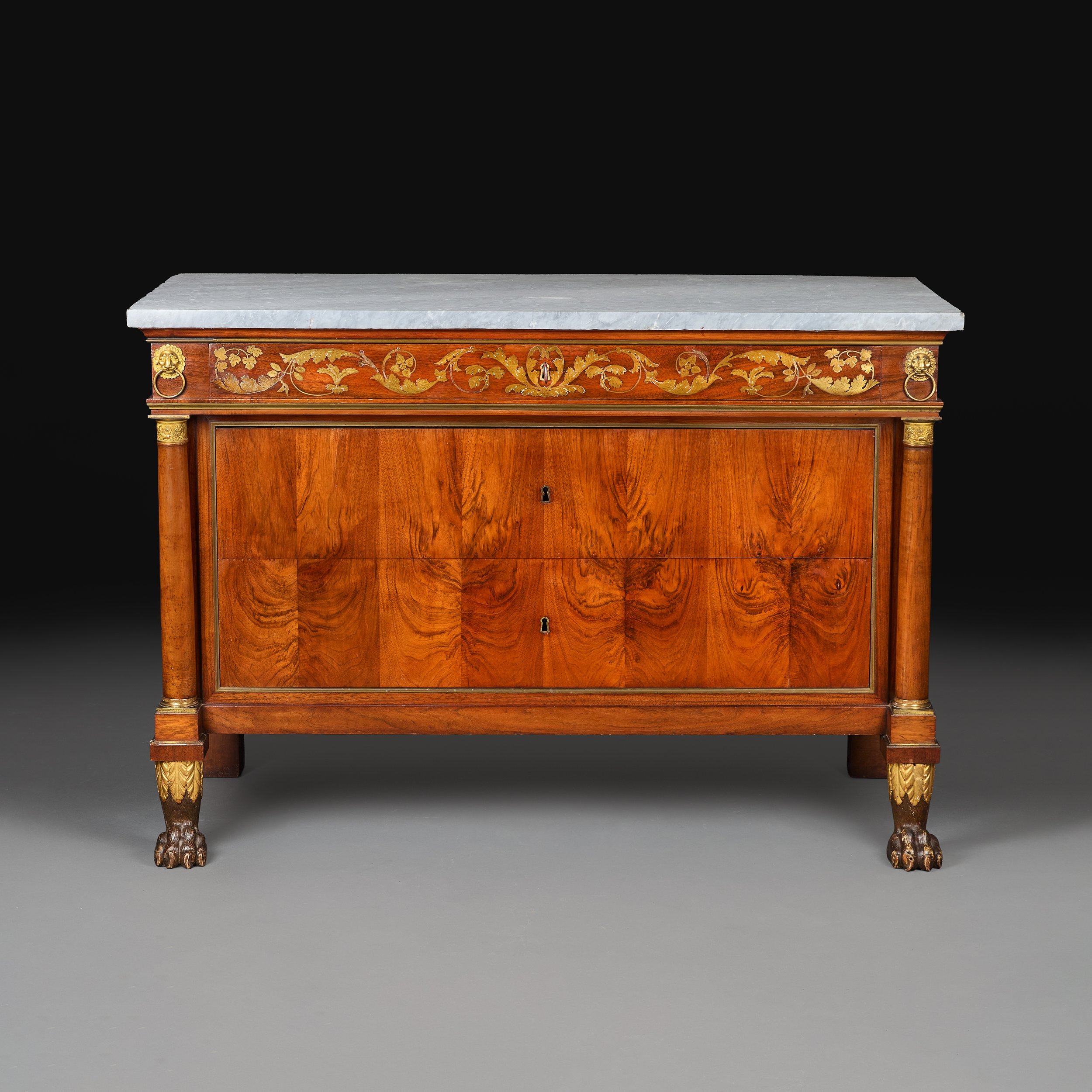
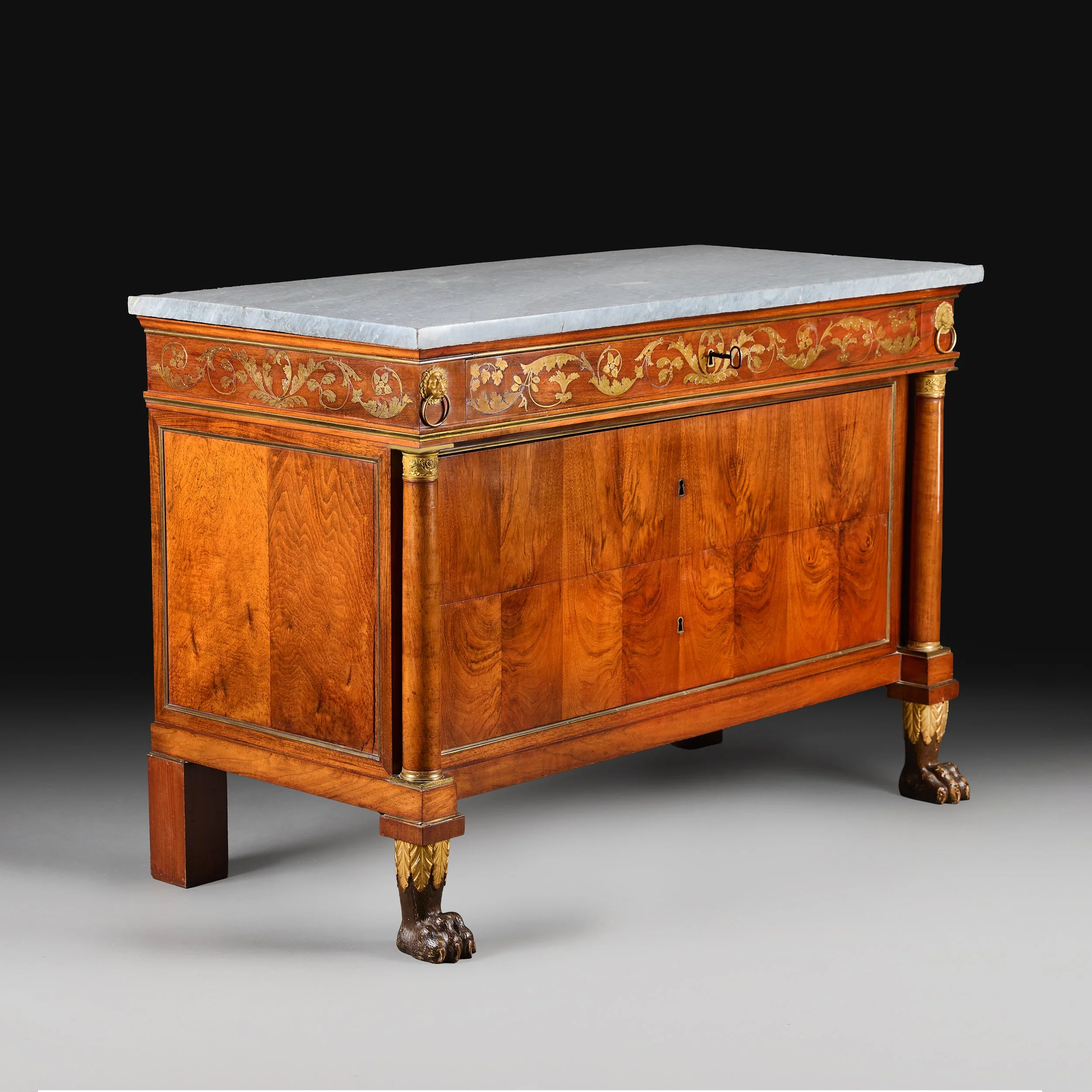
- AN ITALIAN 18TH CENTURY WALNUT COMMODE
AN ITALIAN 18TH CENTURY WALNUT COMMODE
AN ITALIAN 18TH CENTURY WALNUT COMMODE
Italy, Turin, circa 1780
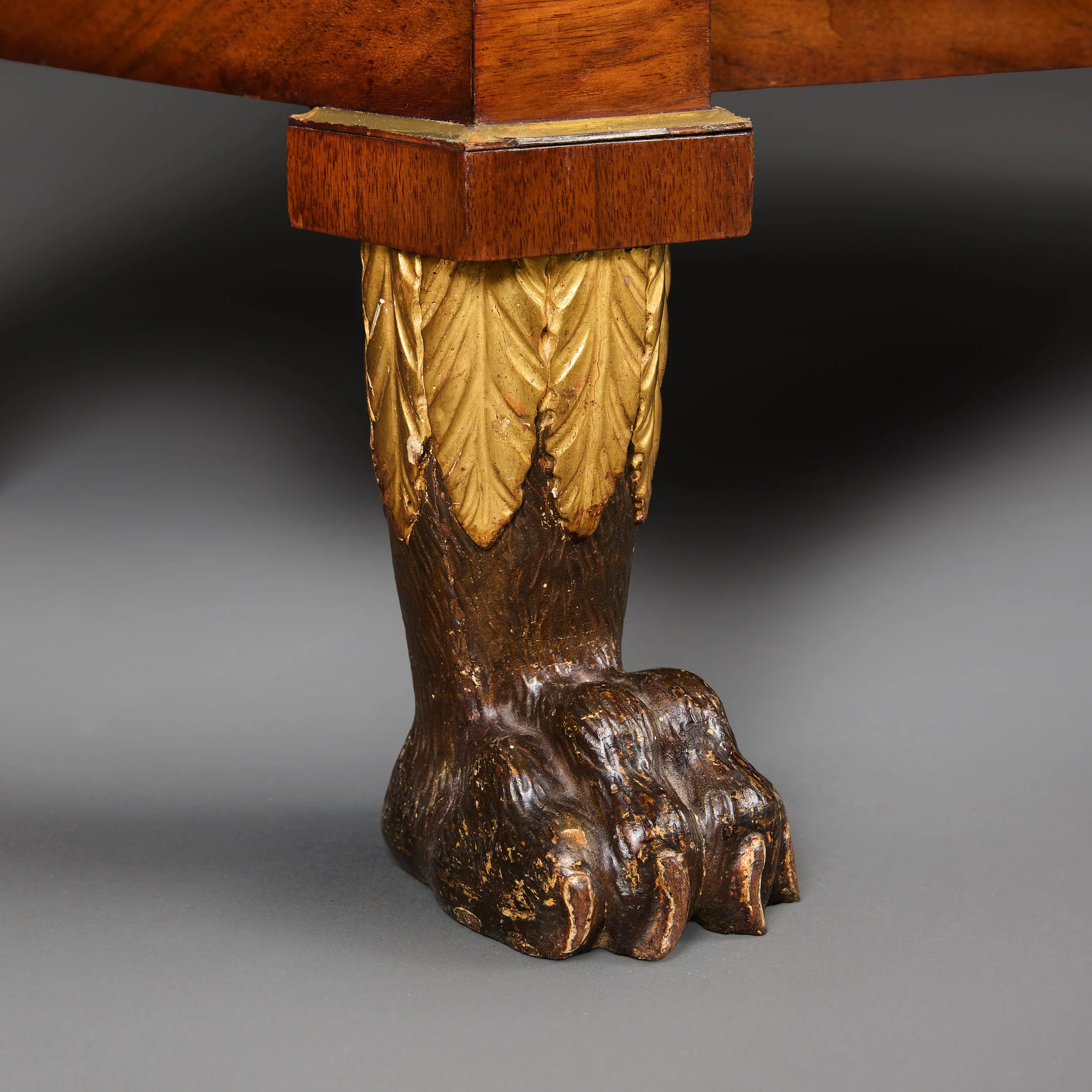
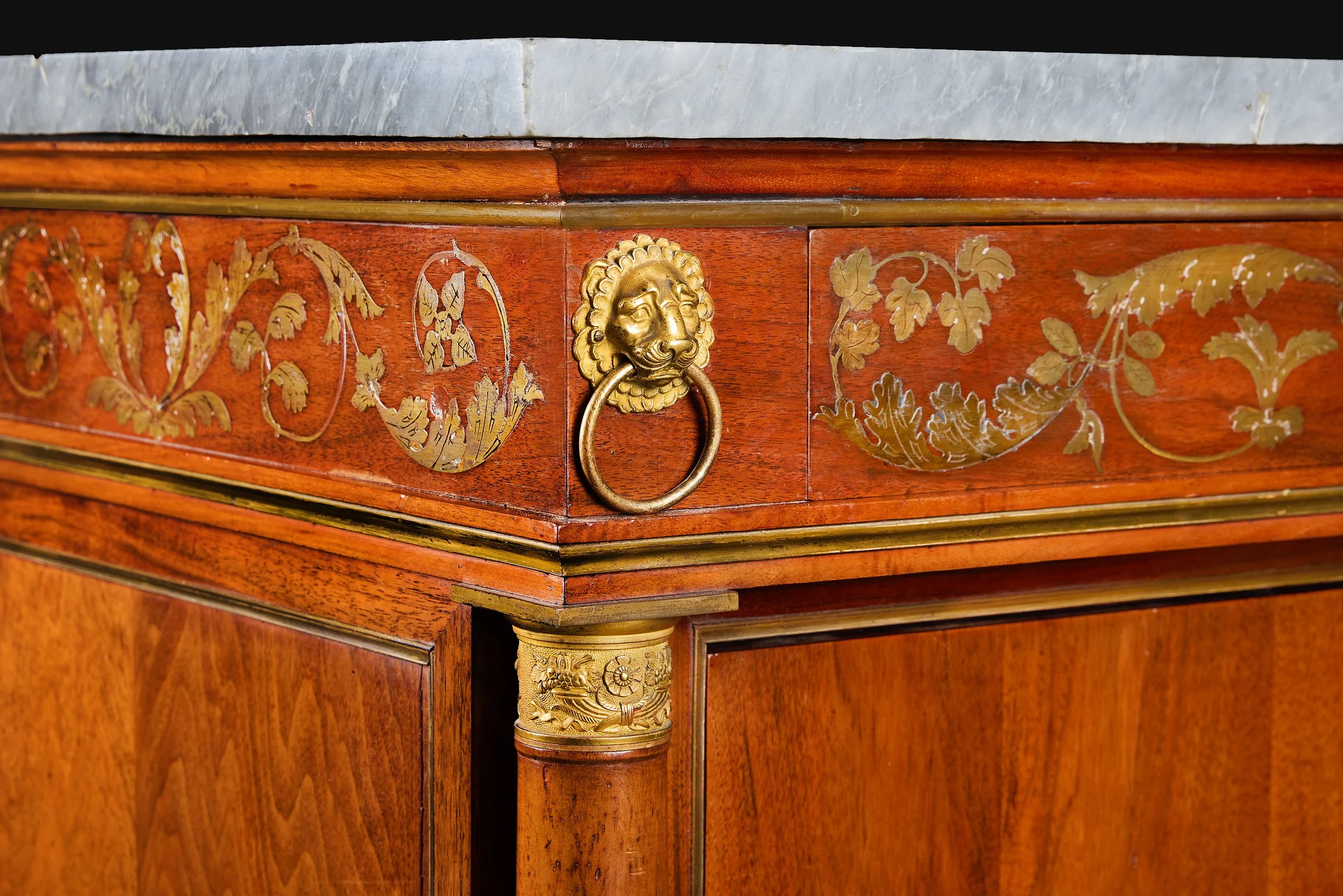
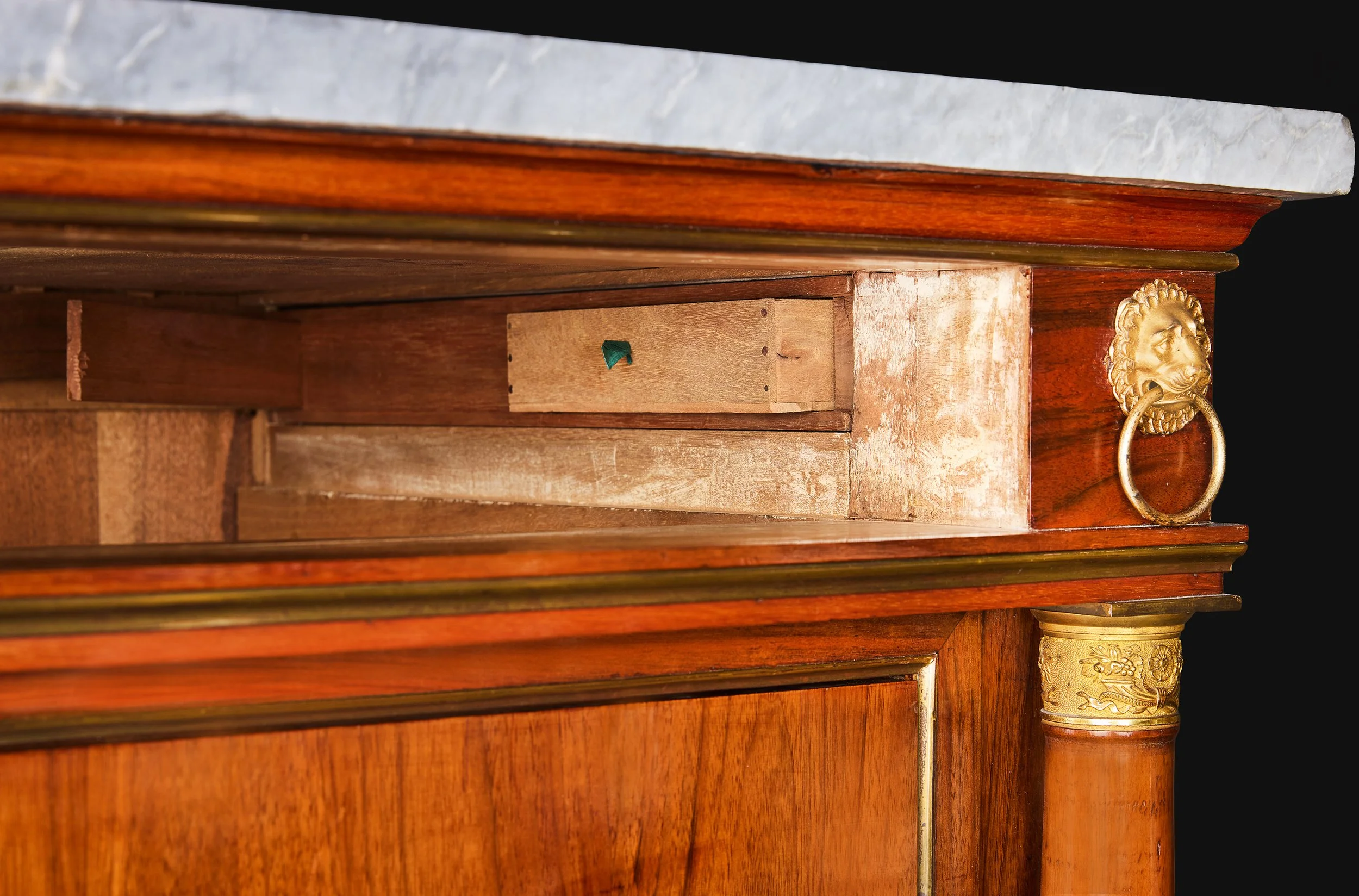
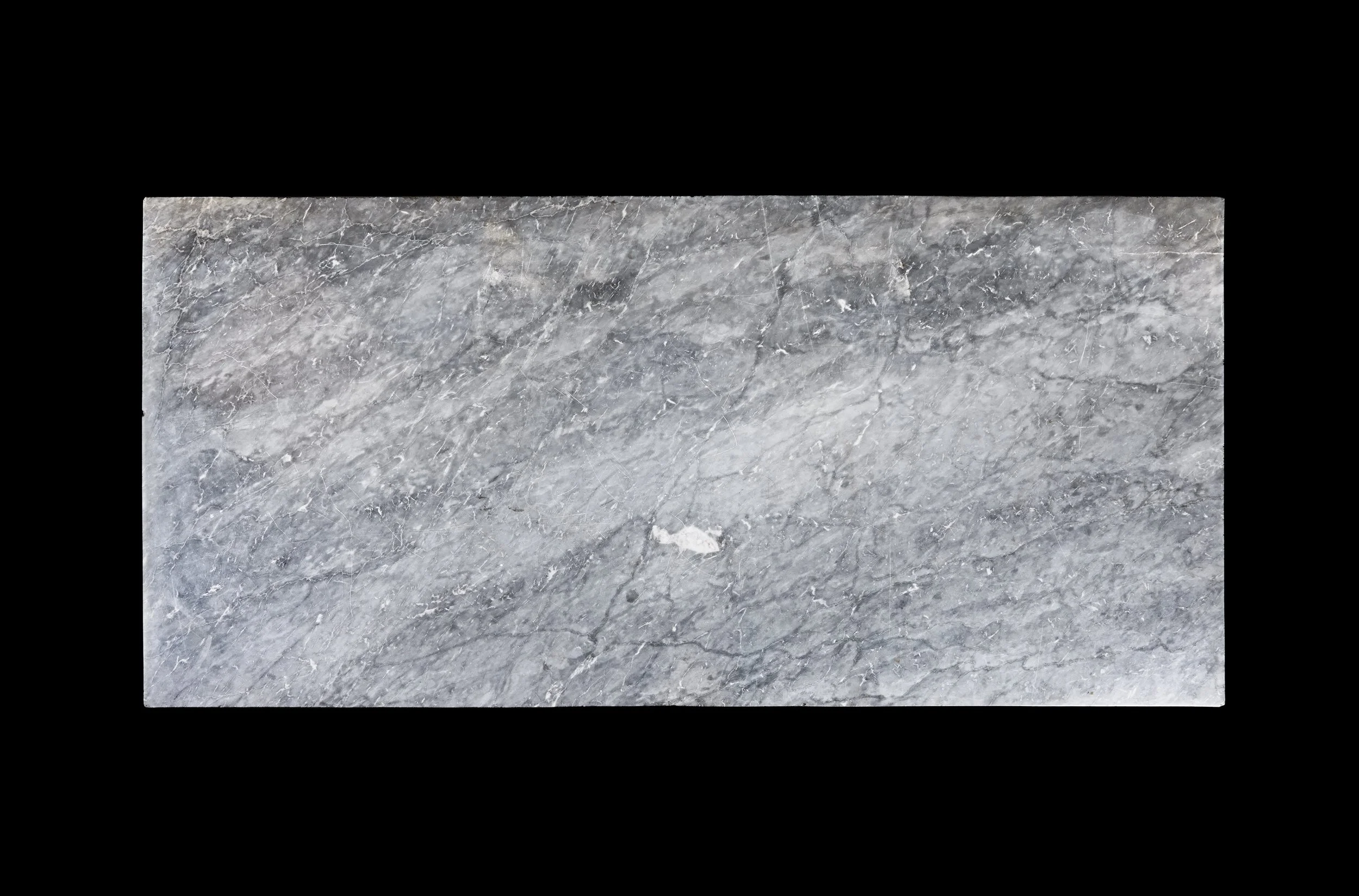
A fine late 18th century Italian figured walnut commode, with two long drawers to the front flanked by veneered columns with gilt bronze mounts, a further long drawer hidden at the frieze and decorated with brass inlay of foliate designs with gilt bronze lions to each side, retaining it’s original French Bleu marble top, and raised on two carved lions paw feet. Provenance: Made for Villa d’Aglie in Turin.
Height 90.00cm
Width 131.00cm
Depth 62.00cm
Villa d'Agliè is one of the few estates on the hills near Turin that have remained almost entirely intact. The first official documents date back to 1606 and attest to the ownership of Duke Carlo Emanuele I, son of Emanuele Filiberto and Margherita di Valois, when he purchased the land and Villa Emanuella, adjacent to where Villa d'Agliè would be built. The nearby land passed to an important lawyer of the Savoy court, Gaspare Bellezia.
Throughout the 17th century it was the summer residence of the Bellezia, an illustrious family connected to the Savoy. Giovanni Francesco Bellezia was an important mayor of Turin, advisor and treasurer to the Duke, famous for leading the city through a severe plague epidemic without ever leaving it. The current shape of the garden in front of the house is due to him.
After the siege of Turin the villa was transformed into a palace by the banker Franco Colomba, close to the Savoy court, who enriched it with statues and decorations still visible today. In the early 18th century Count Ignazio Demorri of Castelmagno enriched the central hall with Martinez's stuccoes, depicting the four elements, and the garden with marble vases and statues. From the late 18th century the villa belonged to Benedetto Maurizio, Duke of Chiablese, favoured son of King Carlo Emanuele III.
In the early 19th century Sir John Foster, the British Ambassador, transformed the Italian garden into a romantic one, planting Lebanese cedars, sequoias and horse chestnuts. In the mid-19th century the villa was bought by the Pilo Boyl of Putifigari; in the early 20th century by the Swedish Reynius, then by the current owners.