- Cabinets & Chests
- A FINE PAIR OF NEOCLASSICAL ITALIAN COMMODES
A FINE PAIR OF NEOCLASSICAL ITALIAN COMMODES
A FINE PAIR OF NEOCLASSICAL ITALIAN COMMODES
Italy, circa 1820
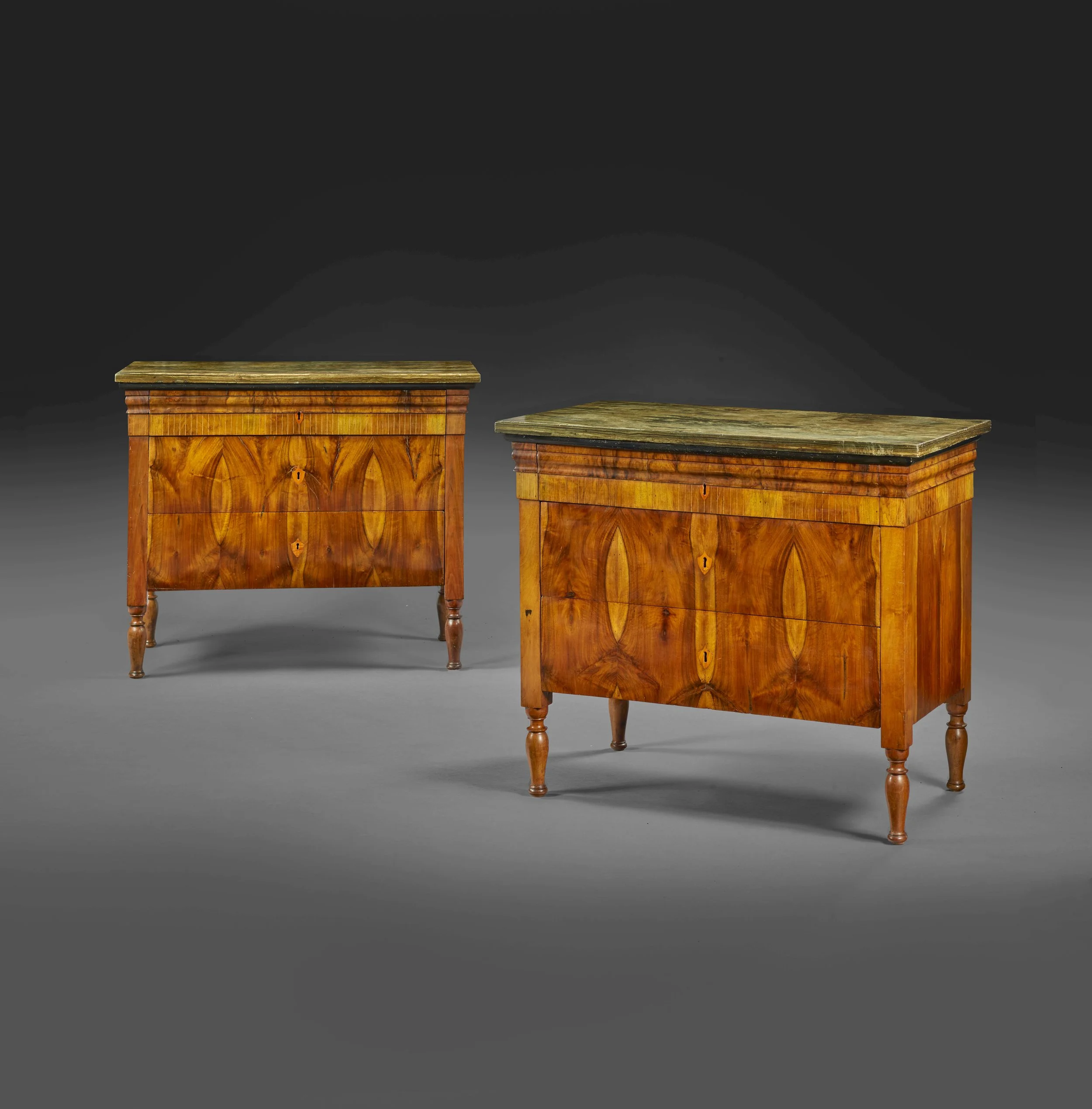
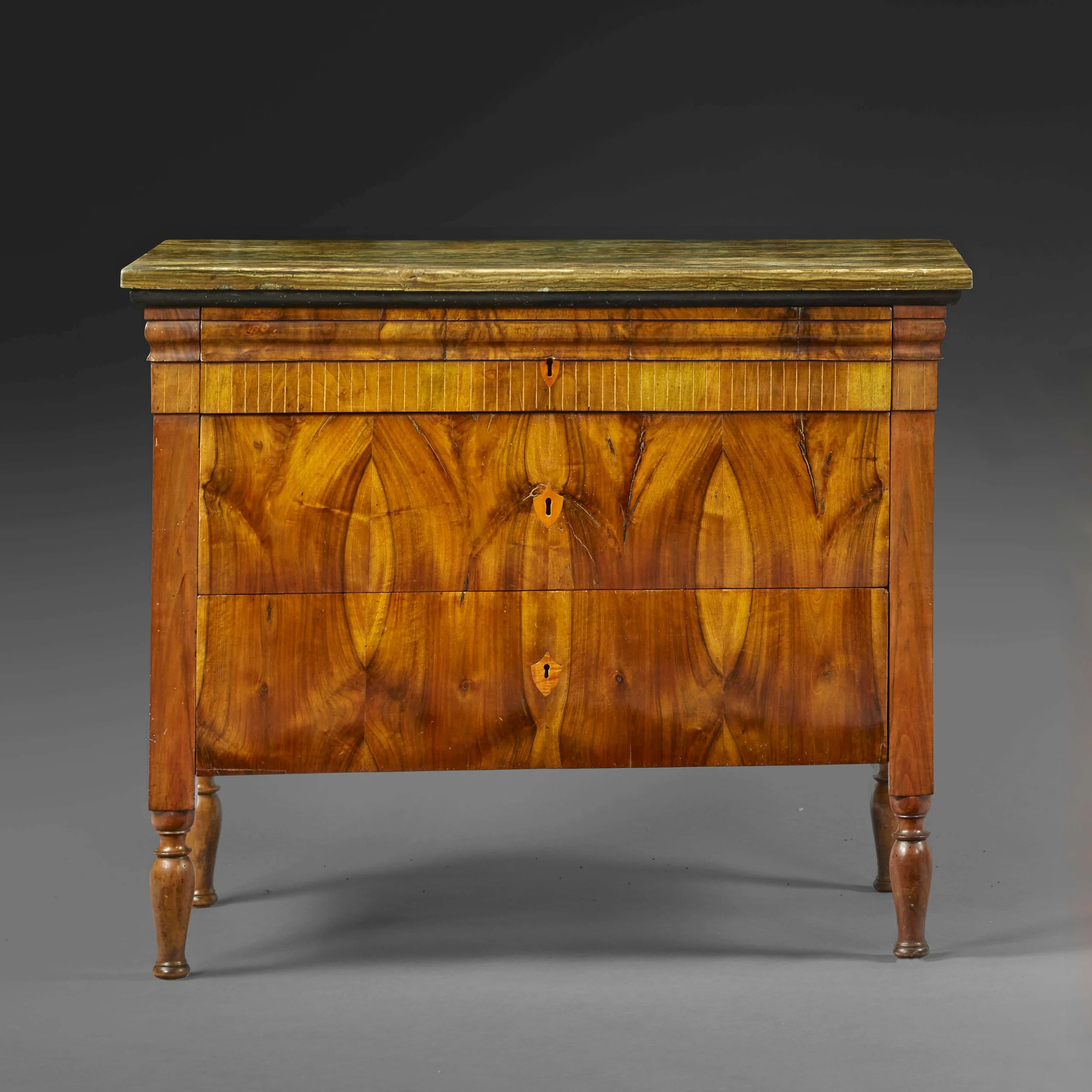
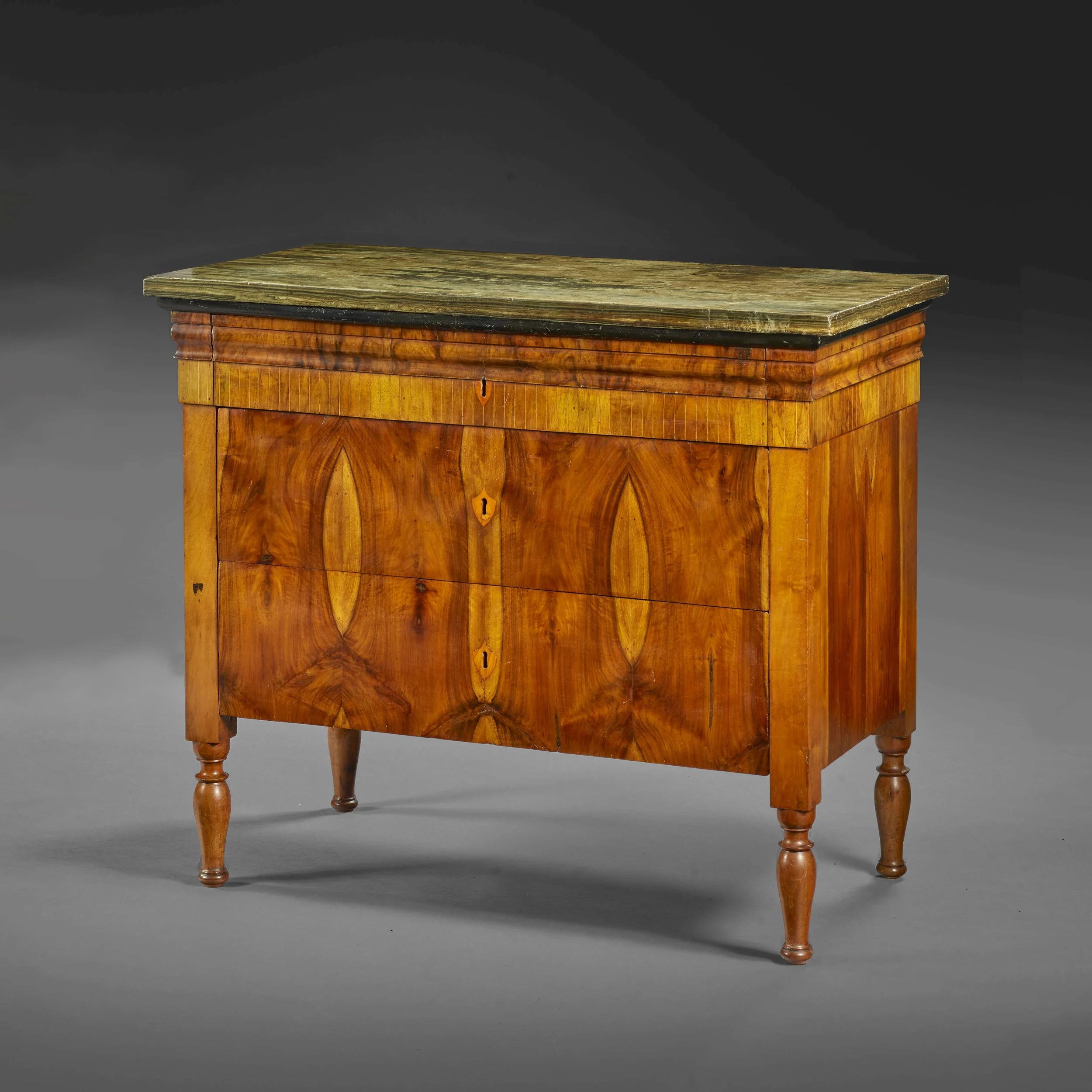
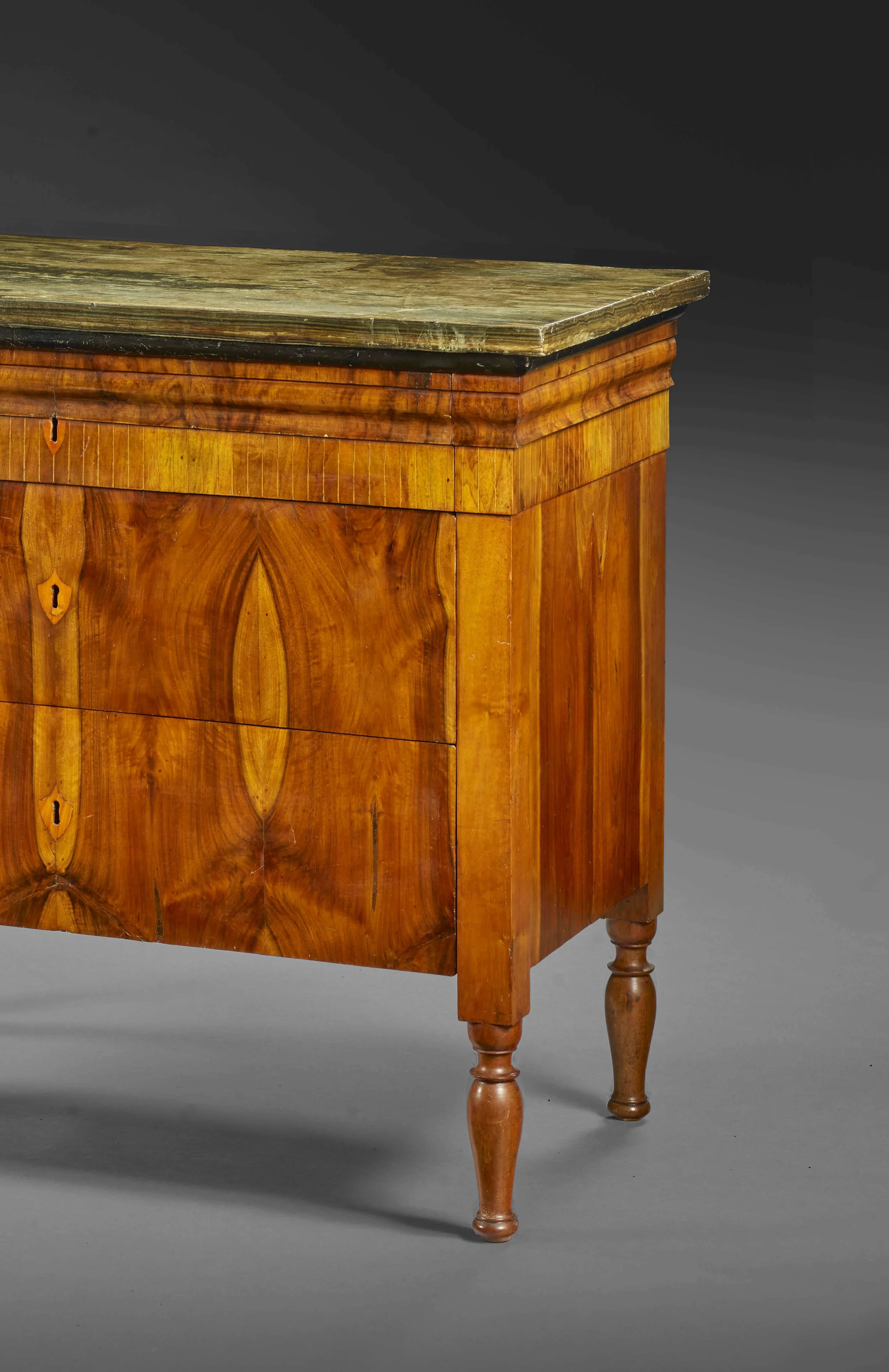
A pair of early nineteenth century Neoclassical Italian commodes, in walnut, walnut veneer and sycamore, with ‘Derbyshire rosewood marble’ tops, the front opening with three drawers, all supported on turned feet.
Height 96.00cm
Width 114.50cm
Depth 60.00cm
This pair of Italian commodes is distinguished by a rare limestone top—classified in the 1825 catalogue raisonné of the Corsi collection of decorative stones (held at the Oxford University Museum of Natural History) as "Derbyshire rosewood marble" due to its resemblance to the colour of rosewood. It is also known as "Ashford alabaster," a name erroneously applied by Corsi in the 19th century because of the stone's thinness. The stone originates from quarries in Ashford, on the estates of the Cavendish family, Dukes of Devonshire. The Oxford University catalogue entry also reveals that the Duke of Devonshire visited Italy several times and met Faustino Corsi, who gifted him a piece of Derbyshire rosewood stone. The pairing of marble or hardstone tops with console tables and commodes reflects the English aristocracy's enthusiasm—spanning the late 18th to the mid-19th century—for Italian marble slabs, often acquired during the Grand Tour. While English collectors frequently commissioned such tops and brought them home to be mounted on English bases of the same period, the combination of an English marble top with Italian commodes—as seen in the pair presented here—is far rarer.
Italy, circa 1820
A pair of early nineteenth century Neoclassical Italian commodes, in walnut, walnut veneer and sycamore, with ‘Derbyshire rosewood marble’ tops, the front opening with three drawers, all supported on turned feet.
Height 96.00cm
Width 114.50cm
Depth 60.00cm
This pair of Italian commodes is distinguished by a rare limestone top—classified in the 1825 catalogue raisonné of the Corsi collection of decorative stones (held at the Oxford University Museum of Natural History) as "Derbyshire rosewood marble" due to its resemblance to the colour of rosewood. It is also known as "Ashford alabaster," a name erroneously applied by Corsi in the 19th century because of the stone's thinness. The stone originates from quarries in Ashford, on the estates of the Cavendish family, Dukes of Devonshire. The Oxford University catalogue entry also reveals that the Duke of Devonshire visited Italy several times and met Faustino Corsi, who gifted him a piece of Derbyshire rosewood stone. The pairing of marble or hardstone tops with console tables and commodes reflects the English aristocracy's enthusiasm—spanning the late 18th to the mid-19th century—for Italian marble slabs, often acquired during the Grand Tour. While English collectors frequently commissioned such tops and brought them home to be mounted on English bases of the same period, the combination of an English marble top with Italian commodes—as seen in the pair presented here—is far rarer.